

SC 31: Automatic identification and data capture techniques
August 2025
The creation of JTC 1/SC 31 is a fortunate confluence of two distinctly different but parallel efforts which resulted in the establishment of SC 31. It may never be known if either or both of the two efforts might have succeeded independent of the other, but it is clearly evident that the formation of SC 31 was expedited by this two-pronged effort.
The Case for SC 31
JTC 1 was formed in 1987, merging the efforts of ISO TC 97 (Information Technology) and two IEC committees, IEC/TC 83 (Information Technology Equipment) and IEC/TC 47/SC 47B (Semiconductor Devices) into a single committee jointly parented by ISO and IEC, to address the various aspects of “information processing systems”. At the time of JTC 1’s formation the primary methods of getting data to the computer were keyboard, computer-to-computer communications, and card technology.
While computers operated at thousands of cycles per second and were 100% accurate, assuming the programming was correct, the method of getting the data to the computer was an error-prone method of key-entry, suffering about 1 error in every 300 characters entered.
The MHIA Effort
Emerging parallel to the effort to standardize computing technology were methods of tying together physical objects as they moved from point-to-point. Most notable in this effort was the Automatic Car Identification (ACI) colour bar code system inaugurated by the North American Railroads in the late 1960’s, the grocery inter-industry product identification code program in 1969, the Plessey bar code use in European libraries in 1971, the use of Codabar by FedEx (1978) and the blood bank industry (1977), the U.S. Department of Defense standardized bar code marking in 1982, the automotive industry bar code program beginning with the publication of the AIAG B-1 symbology standard in 1984, and the health industry bar code standard HIBC in 1984, as well. By 1982 there were 45 identified methods of arranging bars and spaces to encode and convey information.
The first national standard for bar code technology was published as the American National Standard for materials handling — bar code symbols on unit loads and transport packages, in 1983. This standard recommended three of the growing number of bar code standards for use on shipping labels. Soon there were bar code standards published by private organizations, trade associations, consortia, and government agencies. Various industries were employing different methods of print quality and identifying fields of data. It quickly became evident that common, international standards were required if the industry was to truly flourish.
In February 1994 Craig Harmon wrote to Mike Hogan at JTC 1 and in March 1994 made a presentation to JTC 1 in Phoenix, Arizona asking to establish a new subcommittee to address automatic data capture. From that request, an ad hoc committee was formed, which provided its recommendations in November 1995 for a new JTC 1/SC to be formed.
The UCC Effort
In the mid-1990’s, the Uniform Code Council (predecessor to today’s GS1 US) found that its automatic identification standards (most notably the UPC) had attained widespread acceptance in the United States within the consumer goods industry. Its global counterpart EAN (predecessor to GS1) was working towards the same degree of acceptance in those industries worldwide. The UCC believed that its standards should move into other industries. It decided that this could be facilitated if its standards bore the imprimatur in the US of being an American National Standard, endorsed by the American National Standards Institute (ANSI).
Accordingly, the UCC joined ANSI and put a number of its standards through the ANSI process. Once a part of ANSI, the UCC learned of ANSI’s Information Systems Standards Board (ISSB) and joined this group. The ISSB was intimately involved with the US participation in ISO/IEC JTC 1.
In this way, the UCC began to explore how to make its standards internationally recognized by ISO. As it studied the issue and discussed it with international experts, the concept of creating a new subcommittee within JTC 1 began to appear desirable. In 1995, working with the ISSB and the US TAG to JTC 1, the UCC began to develop a proposal to create a new SC, SC 31, in the field of automatic data capture.
In December 1995, this proposal was adopted by the US TAG to JTC 1 for presentation at the next JTC 1 meeting. Richard Gibson of the US, then chair of JTC 1, agreed to take the lead at the JTC 1 meeting in Sydney Australia in presenting the proposal for a new SC.
The Realization of SC 31
SC 31 was created by Resolution 4 of the 11-15 March 1996 meeting of JTC 1 in Sydney Australia. ISO/IEC JTC1/SC31 on Standardization of Automatic Data Capture was given an area of work covering standardization of common coding, data format, syntax and structure, and enabling technologies to individually and uniquely identify items and entities without human intervention. Excluded was work assigned to another international SC or TC. The resolution also dictated that the United States provide the Chair and Secretariat and that the initial meeting be the week of 17 June 1996.
In April 1996, the UCC became the Secretariat of SC 31 and named Alan Haberman Chairman and Teresa Scheiman Secretariat. In 2006 Mr Chuck Biss became the second Chairman of SC 31. He resigned after the 2013 Plenary followed by Dan Kimball in 2014 and Henri Barthel in 2018
The initial SC 31 Plenary meeting was held on 17-20 June 1996 in Brussels, Belgium. 22 national bodies were represented (15 P members and 7 O members), as were 3 liaison bodies. At this plenary, three Ad Hoc groups were created—Data Carrier, Data Structure, and Conformance. (By June 1996, Dick Gibson had retired from AT&T. He was retained by the UCC as a consultant to assist the Secretariat by making sure that all JTC 1 processes were complied with. He served in this role for several years.)
At the second Plenary meeting, 11-13 March 1997, in Zurich, Switzerland, the Ad Hoc groups became Working Groups. A fourth Working Group, on RFID, was created at the third Plenary in January 1998 in Rio de Janeiro, Brazil.
Subsequent plenaries have been held in Sydney 1998, Atlanta 1999, Tokyo 2000, Edinburgh 2001, Seoul 2002, Paris 2003 (see Fig.1), Orlando 2004, Singapore 2005, Moscow 2006, Pretoria 2007, Toronto 2008, Sydney 2009, Beijing 2010, Vienna 2011, Pittsburgh 2012, Seoul 2013, Delft 2014, Montreal 2016, Sapporo 2016 (see Fig.2), Stockholm 2017 (see Fig.3), Chicago 2018 and Qingdao 2019. In 2020, 2021 and 2022, the plenaries were held virtually.
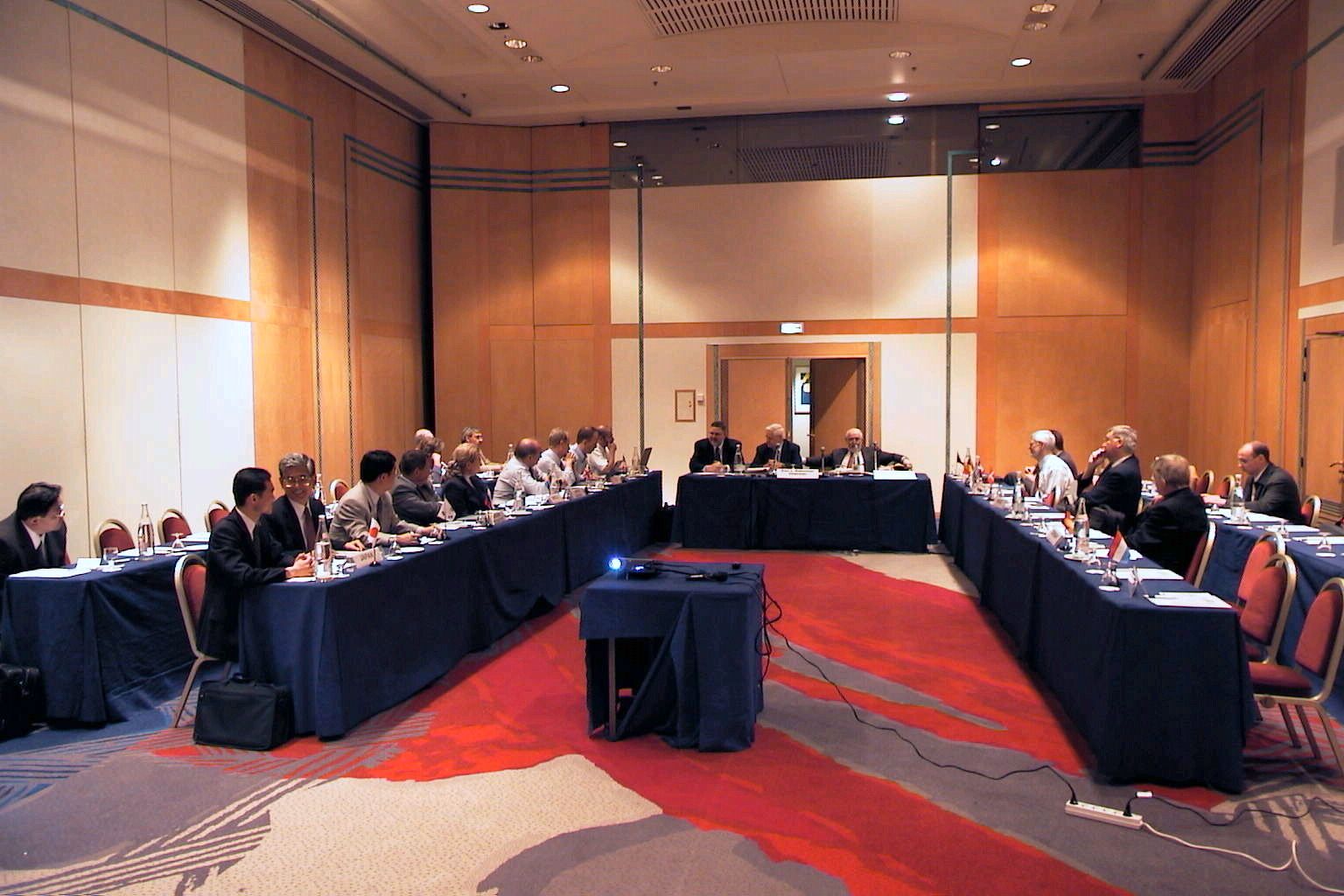
Fig. 1. JTC 1/SC 31 Plenary 2003, Paris
Since its inception, SC 31 has grown, not only in the areas of international specifications for linear bar codes and 2D symbols, data structure, and conformance, but also to encompass the areas of radio-frequency identification including sensor specifications, file management and security; real-time locating systems; and the integration of data collection technologies with mobile computing, mobile telephony, and web access.
The EAN/UPC barcodes read in grocery stores around the globe today have been standardized by JTC 1/SC 31. The social media’s QR Code, the 2011 darling of Business-to-Consumer applications, was standardized in JTC 1/SC 31 back in 2004. All shipments to NATO forces include a label whose bar codes, 2D symbols, data structure, and print quality have all been standardized in JTC 1/SC 31. The mobile phone aircraft boarding passes use the two-dimensional symbols of JTC 1/SC 31. Of all of the implementations of radio-frequency identification (RFID), the notable standards of JTC 1/SC 31, i.e. ISO/IEC 18000-63, Type C, is the most widely accepted technology.
Automatic Data Capture (ADC) technologies now referred to as Automatic Identification and Data Capture (AIDC) techniques perform two basic functions: fast and accurate identification and data capture. So while computers today speak of teraflops, the 134 published standards in JTC 1/SC 31 are what makes those processing speeds fast and accurate from the point of data capture to the point of actionable intelligence.
The editor of the 2012 revision of the history of SC 31 thanked Mr Craig K. Harmon (President QED Systems) and Mr Stephen Brown (former Legal Counsel for the Uniform Code Council) for the source material used to create this history. Regrettably Craig Harmon (1947-2014), one of the co-founders of SC 31 (see chapter „The MHIA Effort“) passed away all of a sudden in 2014. By his engagement and his talent to move standards forward and to manage controversial issues he contributed to the success of SC31 to a great extent. One of his outstanding projects was the development of the 5-language Harmonized vocabulary ISO/IEC 19762 (en, fr, ge, ko, ru).
As part of information technologies, SC 31 is keeping addressing the requirements of new AIDC applications like for Internet of Things (IoT) and Machine to Machine communication (M2M). The project „ISO/IEC 20248 Digital Signature“ shows the dynamic of the developments supplying a tool for implementation of required security features of authenticity and correctness of code contents independent of the AIDC media (Barcode or RFID).
At the 2016 Plenary meeting in Sapporo, SC 31 recognized the 20th Anniversary of ISO/IEC JTC 1/SC 31 and acknowledged the dedication and experience of its member national bodies and technical experts and thanked them for their work.

Fig. 2. JTC 1/SC 31 Plenary 2016, Sapporo
The 23rd Plenary meeting of SC 31 took place June 2017 in Stockholm, Sweden.
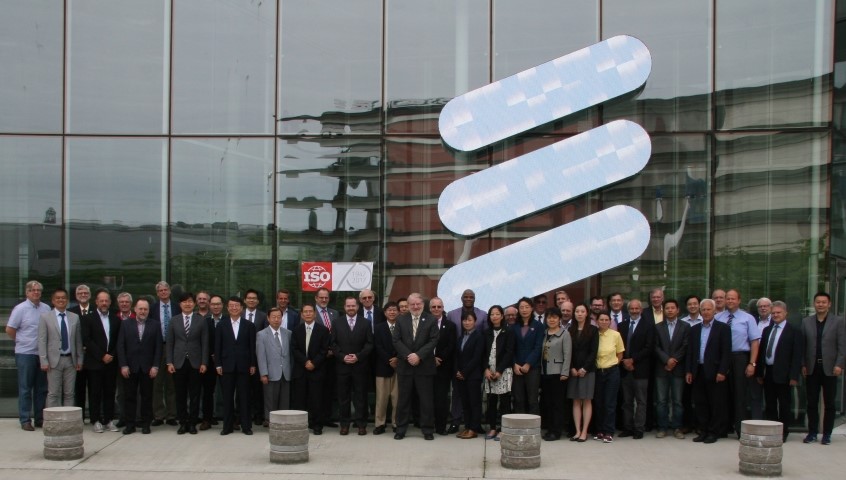
Fig. 3. JTC 1/SC 31 Plenary 2017, Stockholm
Prior to the event the CEN TC 225 Plenary meeting was held in Stockholm as well. The CEN/TC225 Chairman Claude Tételin invited the experts of SC 31 to join the meeting as guests which was appreciated very much as a signal of close cooperation.
SC 31 established its new Working group “WG 8 Application of AIDC standards”. The purpose of the WG 8 is to develop AIDC application standards and assist SC 31 and it’s WGs in promoting and being the external focal point for its work. The first Convenor of WG 8 was Chuck Evanhoe of the United States. The 23rd Plenary was the last meeting for Toshihiro Yoshioka, the Convenor of WG 2. The meeting appointed Joo-Sang Park of Korea as new WG 2 Convenor. The 23rd Plenary was also the last for the third SC 31 Chairman, Dan Kimball. The JTC 1 Plenary held in Vladivostok in October 2017 appointed Henri Barthel chairman of SC 31 for a three-years term. Henri has been involved in SC 31 since its inception in 1996. He was Convenor of the SC 31 Working Group 4 on RFID between 1998 and 2015 and chairman of CEN TC 225 from 2009 to 2015.
In June 2018, the 24th plenary meeting was held in Chicago, Illinois, USA at the University of Chicago Gleacher Center.
Forty-seven people from 12 countries and two liaison organizations attended the meetings. Three of the workgroups: WG 2 – Data and Structure, WG 4 – Radio Communications, and WG 8 – Application of AIDC standards, also met at the event. Each of the workgroups discussed the work in front of them and resolved several issues. Here are a few highlights from the different working groups:
- The Extended Rectangular Data Matrix (DMRE) is progressing. It will provide more flexibility for printing this 2D bar code on small objects. A new rectangular form for the popular QR Code is expected to come soon.
- Han Xin Code, a new 2D bar code introduced by China is in progress
- A new color symbology called JAB Code will be submitted by Germany as a new work item for SC 31
- The Supply Chain applications of RFID series of standards (ISO 17363, 4, 5, 6, and 7) have been transferred to SC 31 and will be revised to include 8-bit encoding
- The Radio Communications working group has more than 20 active work items including a series of items dealing with crypto suites security services for air interface communications
Because of increased activities in his business, Chuck Evanhoe had to resign from the WG 8 convenorship. John Greaves, a well-known figure in the global AIDC industry, was appointed to take over this role.
SC 31 and AIM took the opportunity of a very nice social event to celebrate and thank Chuck Biss who chaired SC 31 between 2006 and 2013 and wished him all the best for his retirement.
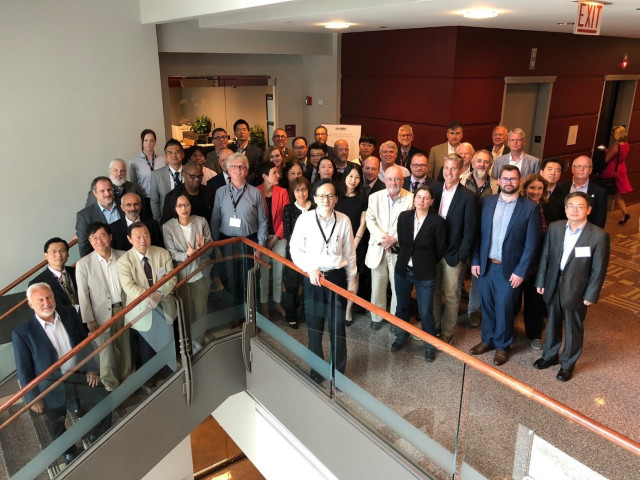
Fig. 4. JTC 1/SC 31 Plenary 2018, Chicago
In June 2019, the 25th SC 31 plenary meeting was held in Qingdao, China. Three working groups also met during the week.
Standards specifying rectangular shapes for DataMatrix and QR Codes are under development as well as two new 2D barcode standards including a polychrome symbology. Radio-frequency identification standards are being deployed at large scale. The meeting was informed that IATA announced that RFID would be adopted for baggage tagging worldwide. Application standards for electronic labelling and RFID applied to supply chains were addressed by the committee.
Joo-Sang Park and Josef Preishuber-Pflügl were appointed Convenors for another term for respectively WG 2 on data and structure and WG 4 on Radio communications.
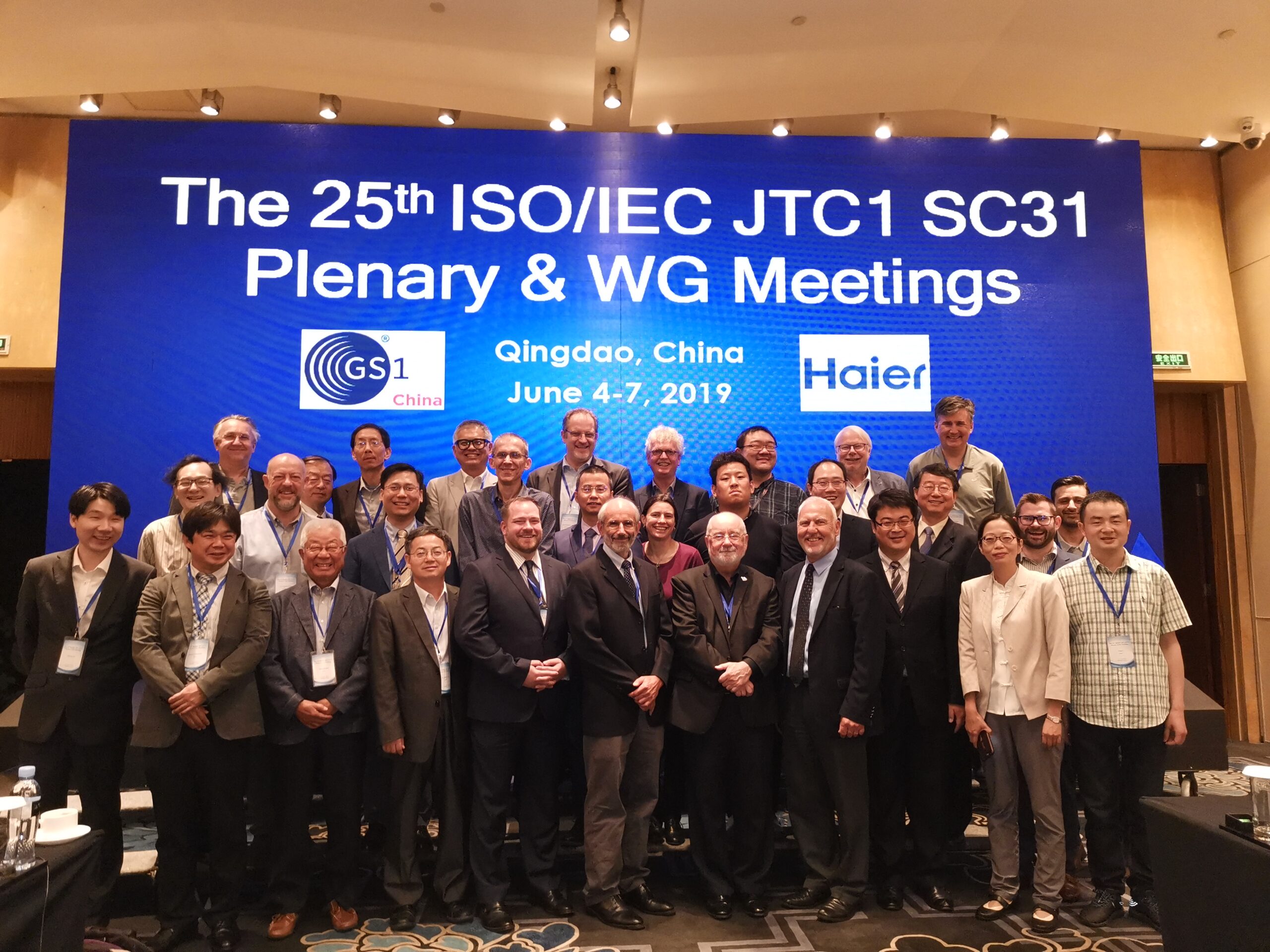
Fig. 5. JTC 1/SC 31 Plenary 2019, Qingdao
The 2020 SC 31 plenary meeting was due to be held in Cape Town, South Africa. Due to the Covid-19 pandemic, the meeting was held virtually. The Heads of Delegations and Working Group Convenors meeting was held on June 11 and the plenary on June 12, with 46 participants from 11 countries, liaison organizations and SC 31 officers.
A very good meeting overall, with practical decisions on standards development, informative updates from Convenors and Liaison Officers and a very useful presentation from our ISO Technical Program Manager, Anna Caterina Rossi.
The meeting agreed to forward to JTC1 the US NB endorsement of Mr. Henri Barthel for another term as SC31 Chair.

Fig. 6. JTC 1/SC 31 Plenary 2020, Virtual
The 2021 SC 31 plenary meeting was due to be held in Canada. Due to the Covid-19 pandemic, the meeting was held virtually. The Heads of Delegations and Working Group Convenors meeting was held on June 8 and the plenary on June 9 and 10, with 45 participants from 11 countries, liaison organizations and SC 31 officers.
The meeting agreed the establishment of a liaison with the RAIN RFID Alliance, an organisation dedicated to promoting and facilitating the implementation of RFID at UHF.
Mr Sprague Ackley was approved as WG 1 convenor for another 3-year term. The meeting noted the resignation of Mr Joo-Sang Park as WG 2 convenor, for personal reasons. A call for convenor would be launched immediately after the meeting. Mr John Greaves resigned as WG 8 convenor. The meeting appointed Ms Jeanne Duckett as the new WG 8 convenor, for a 3-year term.
The meeting discussed its future work plan and organisation structure. An ad-hoc group was established to investigate potential future work items in AIDC and to propose the optimal SC 31 organisational structure to meet the current and future needs.
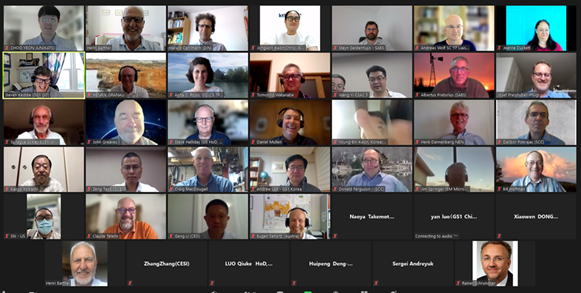
The 2022 SC 31 plenary meeting was due to be held in Korea. Due to the Covid-19 pandemic, the meeting was held virtually. The Heads of Delegations and Working Group Convenors meeting was held on June 7 and the plenary on June 8 and 9, with 53 participants from member countries, liaison organisations and SC 31 officers.
The meeting welcomed Ms Jeanne Duckett and Mr Rainer Schrundner who attended their first plenary as convenor for respectively WG 8 and WG 2. Mr Josef Preishuber-Pflügl was approved as WG 4 convenor for another 3-year term.
WG 1 had a busy work programme and made good progress. WG 2 was considering new work on the topic of linking identifiers to web information resources. Most of the WG 4 projects were in maintenance mode. WG 8 requested to withdraw ISO/IEC CD 17364, ISO/IEC CD 17365, ISO/IEC CD 17366, and ISO/IEC DIS 17367 that were being replaced by ISO/IEC DIS 17360. WG 8 was working intensively on an application standard for AIDC in industrial construction.
The meeting discussed its future work plan and organisation structure. The ad-hoc group established for that purpose concluded that the SC 31 structure was fine. SC 31 should consider new AIDC technologies like Vision and BLE as well as a common data stack for AIDC to harmonize and simplify data standards. The ad-hoc did a survey that resulted in proposals that would be addressed by the relevant working groups.
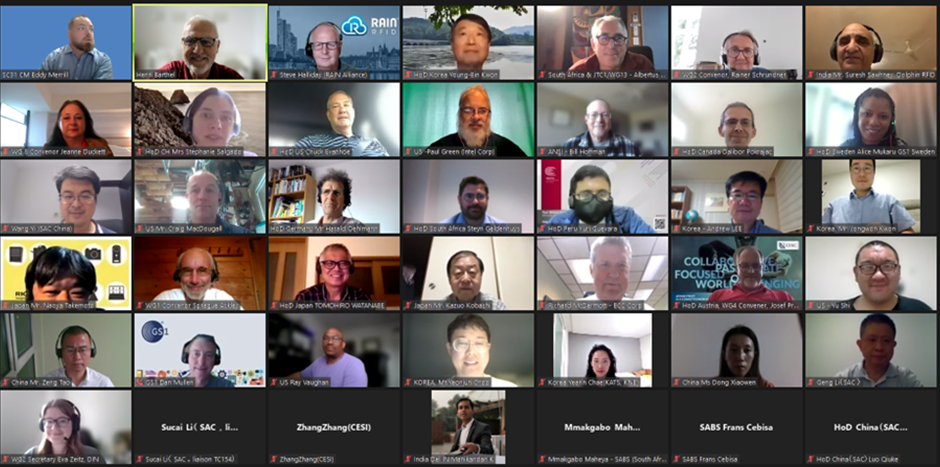
In June 2023, SC 31 held a successful series of meetings from May 30 to June 2 in Brussels, Belgium. Twenty seven experts made it to Brussels and it was good to see each other again 4 years after our face-to-face meeting in Qingdao, China. Thanks to a perfect audio/video system graciously provided by NBN, the Belgian standard body, 23 experts were able to participate and contribute remotely. Working Groups 2, 4 and 8 met on Tuesday and Wednesday. The plenary meeting was held on Thursday and Friday. The committee approved revisions and amendments of several standards. Good progress was made on several key projects. SC 31 was founded in 1996, so many of the standards developed by the committee over time are mature and stable. However, proposals for new areas of work were presented and created a lot of interest.

Fig. 8. JTC 1/SC 31 Plenary 2023, Brussels
SC 31 met in Toronto from June 11 to 14, 2024. Nearly 50 experts participated, either remotely or in person. Prior to the plenary session, the working groups on Data Structure, Applications, and RFID held their own meetings.
Several standards advanced to final approval ballots during this event:
- ISO/IEC 19762, AIDC Vocabulary
- ISO/IEC 15434, Syntax for High-Capacity ADC Media
- An Amendment to ISO/IEC 20248, Digital Signature Data Structure Schema
- ISO/IEC 18975, Encoding and Resolving Identifiers over HTTP
ISO/IEC 18975 is particularly notable as it addresses the connection between identifiers stored in data carriers, such as 2D barcodes, and web information resources about the identified items. This standard paves the way for numerous e-labeling opportunities and applications, including the Digital Product Passport.
Jeanne Duckett and Rainer Schrundner, respectively convenors of WG 8 and WG 2, were appointed for another 3-year term. SC 31 approved the nomination of Mr Duanfeng Jackson He as WG 1 convenor, effective January 1st, 2025. Sprague Ackley was praised for his 27 years of service as WG 1 convener. His passion, dedication, and exceptional leadership were instrumental in the successful development of barcode and OCR standards that are now universally adopted.
The meetings were highly productive, thanks to the excellent facilities provided by GS1 Canada, which enabled effective participation from many experts online. In summary, the event was a success, offering great opportunities for collaboration and progress within the AIDC community.
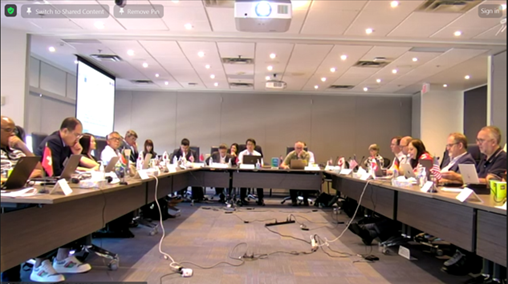

Fig. 9. JTC 1/SC 31 Plenary 2024, Toronto
From June 17–20, ISO/IEC JTC 1/SC 31—the international committee responsible for automatic identification and data capture (AIDC) standards—convened in Seoul, South Korea 🇰🇷.
Ahead of the plenary, our working groups on Applications, Data Structures, and Radio Communications met to advance more than 20 active projects, including new standards and revisions. With over 130 international standards under its responsibility, SC 31 plays a vital role in enabling automation and digital transformation around the world.
The strength of SC 31 lies in its global community of experts, whose contributions drive innovation in barcodes, RFID, and other AIDC technologies.
A sincere thank you to our incredible hosts for providing outstanding facilities and support for both in-person and remote participants:
Korean Standards Association (KSA)
Korean Agency for Technology and Standards (KATS)
GS1 Korea
Korea Testing Laboratory
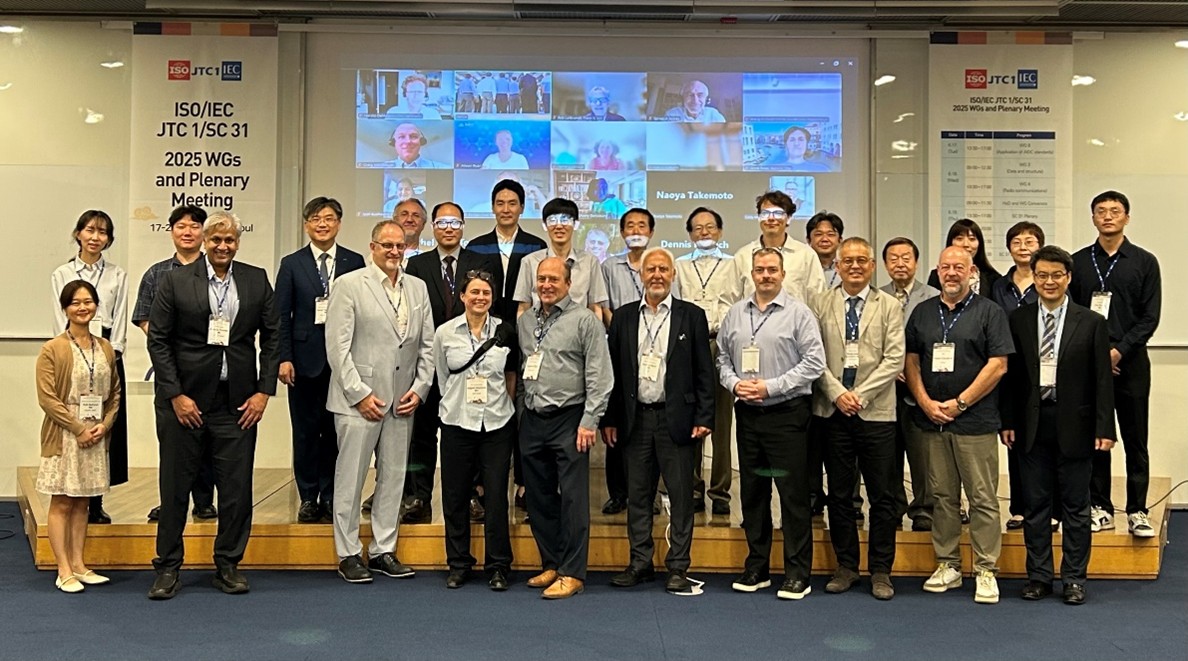
Fig. 10. JTC 1/SC 31 Plenary 2025, Seoul