


Introduction
We start this quarter with a welcome 2026 and a New Year, hoping for health, wealth, prosperity and happiness, setting us up for another productive year developing standards that make a positive impact in our world.
This edition brings insights from the annual JTC 1 Foresight Workshop held in January, alongside updates on sustainability initiatives, including work on the Digital Services Ecodesign standard.
Smart Cities also continues to be a major part in the standards landscape with an update on a common reference architecture and a new technical report analysing global case studies and evaluating real-world implementation. There are a growing number of already planned events taking place, but first we start with a brief international view of New Year.
Happy New Year – Welcoming in 2026
For everyone, New Year can be a time for reflection and change and nations across the globe celebrate and reflect in their own ways. We have two viewpoints from the East on this, to take us into 2026.
Japan
| For Japan, the most important public holiday is January 1st, New Year’s Day (“元旦 (Gantan)”) that is more than just the first day of the year. It is a special day to welcome the new year with a fresh and calm mind. It is a time for new beginnings and quiet reflection on how one wishes to live in the year ahead, accompanied by hopes for peace, health, and tranquillity. That is why New Year’s Day in Japan has traditionally been seen as calm and solemn rather than noisy—a day to renew oneself. Unlike more festive or noisy New Year celebrations seen elsewhere, the Japanese New Year has long been characterized by a calm and solemn atmosphere. This reflective quality is why the day is often viewed as an opportunity for personal renewal and a thoughtful recommitment to one’s values and intentions for the coming year. |  |
A Shimekazari (decorative shimenawa) is a traditional Japanese New Year decorations displayed at entrances or doorways. They mark a purified space and symbolically welcome the spirit of the New Year, while warding off misfortune and expressing wishes for peace, health, and good fortune in the year ahead.
Toshihiro Suzuki
China (Chinese year of the horse)
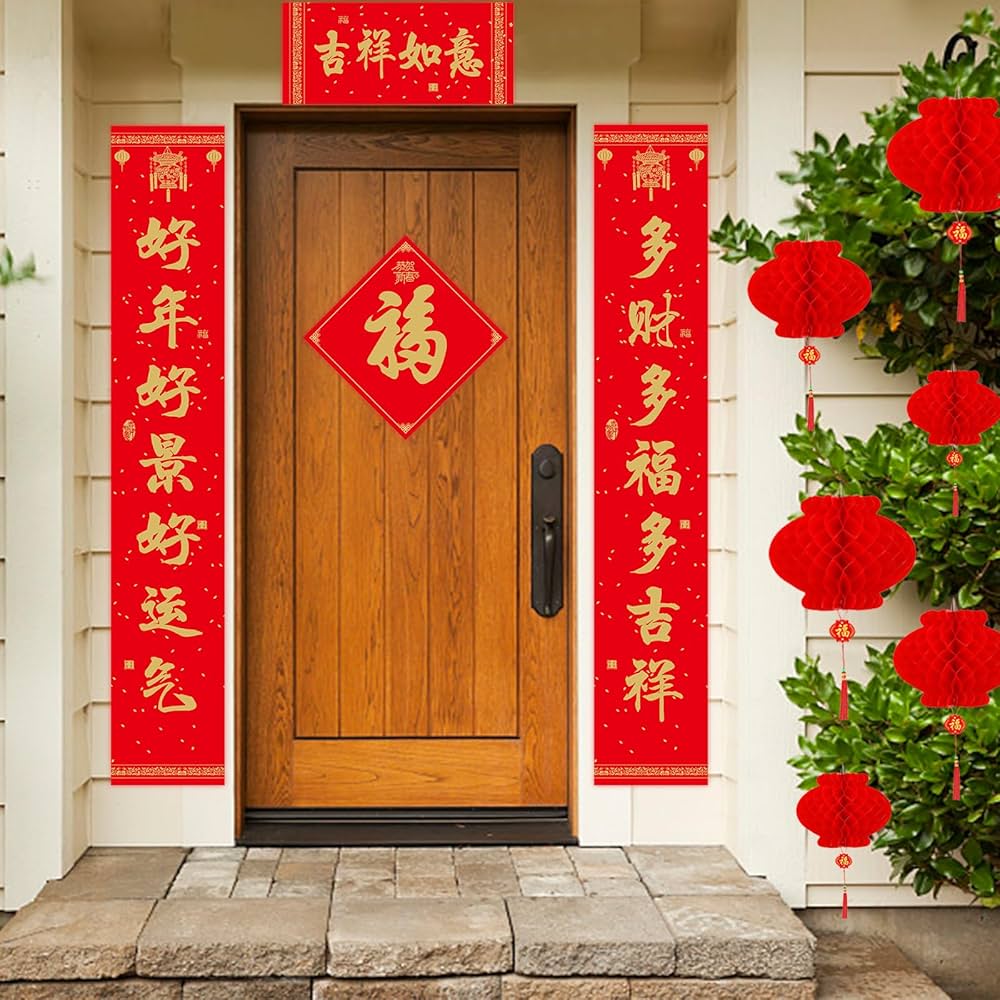
Chinese New Year, also known as the Spring Festival, is the most important traditional holiday in China, embodying the values of family reunion, hope, and cultural heritage. This year, starting on February 17th, we welcome the Year of the Horse — a symbol of vitality, progress, and success in Chinese culture. The Year of the Horse is often associated with energy and new opportunities. The celebration begins on New Year’s Eve, when families gather from near and far for the reunion dinner.
 |
Popular dishes include dumplings, which resemble ancient ingots and symbolize wealth, and fish representing abundance and prosperity. After the meal, many families stay up late to welcome the new year together, a tradition known as “shou sui.”
On the first day of the new year, people visit relatives and friends to exchange greetings and good wishes. Elders give red envelopes containing lucky money to children, conveying blessings for the year ahead. Red, considered an auspicious colour in Chinese culture, is seen everywhere — on lanterns, couplets, and decorations — creating a joyful and festive atmosphere across communities. In addition to family gatherings, various traditional activities take place during the holiday, such as dragon and lion dances, temple fairs, and lantern displays. |
These events reflect the richness and diversity of Chinese culture. The celebrations conclude with the Lantern Festival, when people enjoy sweet glutinous rice balls called tangyuan and admire colourful lanterns — a symbol of unity, harmony, and happiness.
Chinese New Year is not only a time of nationwide celebration but also a meaningful expression of cultural continuity and emotional connection. As we enter the Year of the Horse, may the new year bring energy, success, and bright prospects to all.
YANG Liyun, JIANG Yaxin
JTC 1 Foresight Workshop
On 22 January at 12:00 UTC, ISO/IEC JTC 1 convened its second Foresight Workshop, aimed at sharing key insights on emerging technologies that may impact JTC 1 in the near term. Hosted by JTC 1/AG 2 (JETI), the three‑hour session brought together 125 participants to examine the transition of emerging AI technologies from conceptual research to real‑world deployment. A key outcome of the discussion was the identification of Physical AI as requiring immediate standardization action within ISO/IEC JTC 1, while Neuromorphic Computing was recognized as remaining in a longer‑term, exploratory phase.
The topics presented and discussed were:
- JTC 1 Top Priority Technologies and Survey Results, presenting an overview of emerging technologies identified through JTC 1’s annual survey and Technology Trends Reports (TTRs);
- Physical AI, focusing on AI systems that directly perceive, reason, and act in the physical world;
- Neuromorphic Computing Systems, examining brain-inspired computing as a potential long-term paradigm shift; and
- World Economic Forum (WEF), Top 10 Emerging Technologies, highlighting policy-driven and convergent technologies with strong governance implications.
Following on was a panel discussion around these emerging technology points and how they might affect the wider ecosystem that they will work in. Ultimately, the workshop concluded that standardisation must undergo a structural shift, moving beyond narrow technical specifications to focus on system-level governance, trust, and responsible long-term impact.
All presentation slides and video for the workshop can be found online here:
https://www.iec.ch/academy/webinars/jtc-1-foresight-workshop
Seugyun Lee, Yaesul Park
Digital Services Ecodesign, new specification
The use of digital technologies has grown exponentially—and so has the consumption of resources such as materials, energy, and water. To address these environmental impacts from the very beginning of a digital service’s life cycle, JTC 1’s subcommittee on Sustainability, IT and data centers (SC 39) has published a new technical specification: ISO/IEC TS 20125-1:2026, Information Technology – Digital Services Ecodesign – Ecopractices for Life Cycle Stages.
Developed by the working group on Eco-design of digital services (Working group 4), this specification
| provides a structured set of requirements and recommendations to help organizations design and operate digital services with sustainability in mind. It is intended for immediate use and serves as a foundation for future development into an International Standard. Feedback from early adopters will play a key role in shaping its evolution. |  |
The first edition of ISO/IEC TS 20125-1 covers six life cycle phases and includes 73 requirements and 177 recommendations:
- Requirements gathering, prioritization, and contextualization
- Design phase
- Implementation
- Use and operations
- Maintenance
- End of life
By implementing this voluntary standard, organizations can:
- Reduce energy and material use throughout the digital service life cycle
- Enhance transparency and sustainability reporting
- Support corporate social responsibility (CSR) objectives
- Drive innovation in eco-efficient IT practices
For organizations seeking to manage and minimize the environmental impact of their digital services, ISO/IEC TS 20125-1 is an essential guide.
👉 Learn more or access the specification here.
Ricardo Gonzalez Llera, Bill Ash
Advancing Smart City Digital Platforms: From ISO/IEC 24039 to New Case Study Technical Report (TR)
As cities continue to digitalize their infrastructure and services, the need for a unified architectural foundation for smart city platforms has become increasingly evident. Smart city digital platforms integrate diverse data sources, applications, and stakeholders, yet their architectures often differ significantly across regions.
To address this gap a new standard has been developed: Information technology – Smart city digital platform reference architecture – Data and service (ISO/IEC 24039), published in 2022, provides a reference architecture for smart city digital platforms (SCDPs), focusing on data and service capabilities that support interoperability and cross-domain integration.
ISO/IEC 24039 defines a structured framework through four functional groups: Technical Support, Resource Management, Capability Exposure, and Interface. By specifying core functions such as data governance, service exposure, data collection, and delivery interfaces, the standard enables cities and solution providers to align their platforms with a shared architectural model. Building on this foundation, JTC 1’s Working group on Smart Cities initiated a new Technical Report (TR) project to examine how ISO/IEC 24039 is being implemented in real-world deployments. Approved through Committee Internal Ballot (CIB) in early 2025, the TR — Information Technology — Case study of ISO/IEC 24039 for smart city digital platforms — aims to assess the practical relevance of ISO/IEC 24039 and to identify areas for future improvements.
The technical report collects and analyses smart city platform cases globally, including València City Platform (Spain), Smart Chengdu Digital Platform (China), Smart City Data Hub (Republic of Korea), Henan Smart Grid Digital Platform (China), Anyang IoT-based Smart City (Republic of Korea), Jinan Traffic Brain (China), etc. Through the structured comparison, the technical report investigates how the architectural elements of ISO/IEC 24039 are reflected in deployed systems, such as data collection mechanisms, metadata governance, service integration practices, and API exposure.
Looking ahead, the report is expected to inform potential updates towards a second edition of ISO/IEC 24039, ensuring the standard remains aligned with evolving urban technologies and governance models. Through these efforts, the Smart Cities working group continues to advance a globally coherent approach to smart city architecture—reinforcing ISO/IEC 24039 as a strategic reference point for digital platforms, and supporting cities in building more reliable, interoperable, and future-ready urban systems.
Heng Qian
Korean technology exchange workshop on Cloud computing
| Members from the Cloud computing and distributed platforms subcommittee (SC 38) held an event in Seoul, Korea on March 20, in conjunction with their plenary meeting, to exchange important and recent development and trends in standardization with a Korean organization that is establishing a forum for discussions on international cloud standards. The strategy is to boost the competitiveness of the cloud ecosystem by strengthening the link between international standards and domestic industries. | 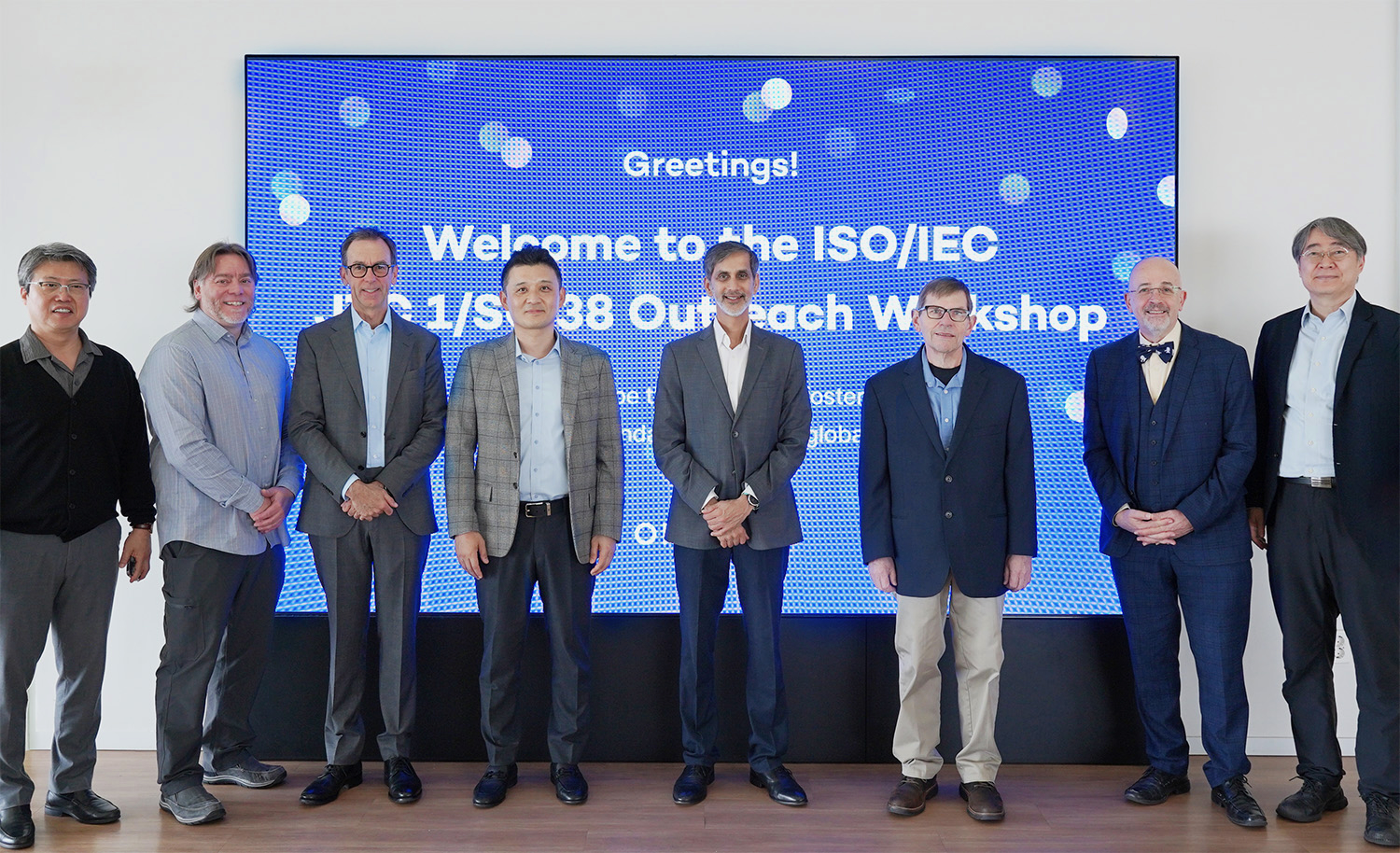 |
A number of experts spoke at this event on topics such as Interoperability and portability, AI cloud and policy design.
A full article has been posted in the Korean news and can be found here: https://zdnet.co.kr/view/?no=20260323144615
JTC 1/AG 1 Communications
Future Events
2026
April
Zero Day Conference – 22-23 April
- SC 27 is giving a keynote speech about Global Impact of ISO/IEC 27001 at the Zero-Day Conference (Shape your Cybersecurity Strategy) in Geneva
https://www.zero-day.ch/
May
International standardization of IT and the Brazilian experience on its adoption – 6 May
- Important communication workshop about global standards for the Brazilian regulators and policy makers.
Geneva Cyber Week – Featuring JTC 1/SC 27 – 4-8 May
- Advancing Global Cooperation in Cyberspace. This event serves as a major platform for governments, international organizations, industry and civil society to discuss practical cooperation on cybersecurity.
https://genevacyberweek.com/en
June
SC 27 at BSJ
- Bureau of Standards Jamaica (BSJ) community about the global take-up and its business applications
October
World Standards Day – 13-16 October (TBD)
- Sustainable ICT: “How can sustainable ICT practices benefit both our environment and our organization?”
Thanks goes out to all our contributors to this quarter’s newsletter, the AG 1 team for getting it ready, and don’t forget that you can submit articles to be included in the next quarterly newsletter by emailing us directly or by using the online submission form at JTC1info.org, we’d love to hear from you.
Deadline for the contributions to the next newsletter is June 10th 2026.
Recent Comments