


Basking in the limelight of our new logo, welcome to the Q3 2025 JTC 1 newsletter. It’s always a busy time in JTC 1 and this quarter has been no exception, while we make allowances for many resources in various countries taking time out for vacations.
This quarter you’ll hear about what took place in the increasingly regular workshop from WG 12, 3D printing and scanning, awareness and promotion of the newly published and eagerly awaited standard 27701, Privacy information management systems — Requirements and guidance and we have a perfectly timed writeup celebrating SC 27’s 35th birthday. We are also delighted, that following a clear-out of old photographs, this sparked a conversation that has resulted in the creation of a short piece from a historical voice in JTC 1, as he remembers some of his time in JTC 1 during the late ‘80s and ‘90s
3D and 4D scanning workshop
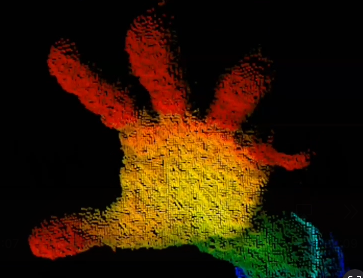 |
Professor Kyu Won Shim, the convenor of working group 12, along with a number of experts joined together on July 23rd to hold a virtual workshop on Interoperable file formats related to 3D/4D scanning and printing. Seventy participants joined the specialized Zoom workshop designed to expand people’s understanding of key 3D and 4D file formats — including STL, OBJ, PLY, 3MF, DICOM, glTF, and USD. By examining the characteristics and use cases of these formats, they explored how they are used across a wide range of industries, from manufacturing and healthcare to digital twins and the metaverse. |
A key focus of the session was to examine the challenges associated with interoperability among diverse 3D/4D file formats. The workshop facilitated discussions on existing barriers to seamless data exchange and explored potential solutions to enhance compatibility and integration across various platforms and applications.
The workshop also featured contributions from other ISO and IEC committees working in related areas, offering participants a broader view of the evolving landscape of 3D/4D scanning and printing.
Prof Kyu Won Shim (WG 12 Convenor)
Ms Yaeseul Park (Committee Manager)
Information security, cybersecurity and privacy protection — Privacy information management systems — Requirements and guidance (27701:2025)
The new standard Privacy information management systems — Requirements and guidance (27701:2025) is an international standard that establishes requirements and provides guidance for implementing a Privacy Information Management System (PIMS). It is designed to help organisations manage privacy risks related to the processing of Personally Identifiable Information (PII) and to demonstrate compliance with global privacy regulations, including the GDPR, CCPA, and similar laws across jurisdictions.
The new standard introduces a dedicated set of security-related controls within Annex A, helping organisations manage privacy risks using a structured, auditable approach. The standard includes normative guidance in Annex B, and detailed mappings to GDPR, ISO/IEC Privacy Framework (29100), and other relevant privacy frameworks, ensuring global applicability. This standard ensures compatibility with international privacy and security practices. It also facilitates independent verification and certification, helping organisations demonstrate compliance and build trust.
Main Changes
- Now stand-alone: No longer requires ISO/IEC 27001 (Information security, cybersecurity and privacy protection — Information security management systems — Requirements)- easier to adopt and certify independently.
- New security controls: Integrated directly into the standard for PII controllers and processors.
- Updated Annex A: Organised into PII controller, processor, and security-related controls.
- Annex B expanded: Practical, clearer guidance for each control.
- Improved global alignment: Includes mappings to GDPR, ISO/IEC 29100, 27018, and 29151.
- Supports certification bodies: Via ISO/IEC 27706, enables direct PIMS certification.
Benefits for Stakeholders
- Simplifies compliance with privacy laws across jurisdictions.
- Standalone certification reduces dependency and cost.
- More relevant for cloud, AI, and cross-border data environments.
- Clear roles and responsibilities improve governance and accountability.
- Easier integration with ISO/IEC 27001, 9001, and 14001 in multi-system environments.
- Stronger trust signals for regulators, partners, and customer
Alan Shipman, Lucy Best (BSI), Jessie Sahota (BSI)
A trip down memory lane
My name is Bernard Marti and I landed in ISO TC97/SC2 around 1982. My goal was to obtain a coded set of European characters for telecommunications services, intended for the general public: teletext for television, Videotex for telephone operators.
At that time, the reference was the international alphabet No. 5 of ISO 7-bit coded character set for information interchange (ISO 646), which only included the 2×26 basic letters of the Latin alphabet. Since I came with a project in my pocket intended to code the 334 alphabetic characters allowing interoperability from Iceland to Malta and from Brittany to Poland: 30 languages, national or regional, I told myself that I didn’t have much longer. That was a fatal error as I attended JTC 1’s SC 2, Coded Character sets for 15 years and ended up being the chair for 9 years.
A true love story? Not quite, at first my project assumed that certain characters were represented by two codes. And this didn’t please Dara Hekimi, the stern chairman of WG 3, who didn’t believe in variable lengths. And  besides, he had his own vision of the French language and believed that the characters œ and Œ didn’t exist. He was supported in this by chairman Dubos, whose company (Bull) absolutely didn’t want to be forced to put this character on its keyboards. English speakers followed this debate with amused incomprehension and nicknamed me “the knight of the flying egg.” Why? Because they saw in Œ an egg thrown by a character in a comic strip, an egg with three lines indicating speed. Yet, standard 6937, Coded graphic character set for text communication — Latin alphabetwas born and adopted at the same time by the ITU-T: Rec.T51.Undoubtedly one of the first standards resulting from cooperation between these two organizations.
This prompted my friend Dara to launch a counter-proposal, the 8859-1 standard 8-bit single-byte coded graphic character sets, which was widely used on the Internet before being superseded by the universal standard concocted by Mike Ksarr in WG 2, and which had many younger sisters specialized in specific geographical areas. Dara’s small revenge was to have the œŒ pair in the initial proposal replaced by x and ÷.
Sometimes, standards groups can face diplomatic challenges. When we studied the Cyrillic version of the 8859 collection, we listed the languages and countries concerned. Among them was Macedonia, which provoked an angry intervention from the Greek government: “Macedonia is a Greek province.” We calmed things down by finding a formula to designate Macedonian without actually saying the word. 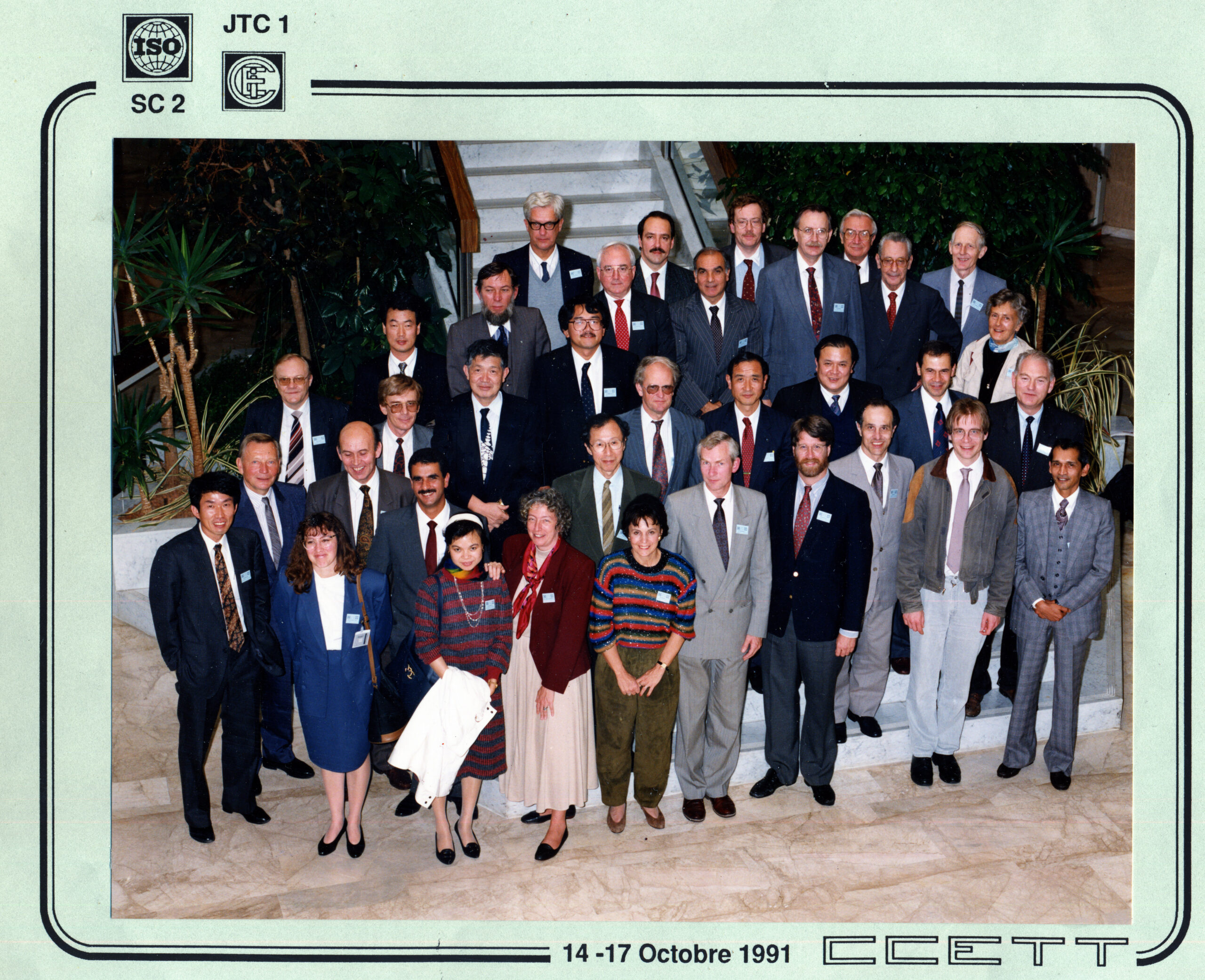 I also remember the moment when European Egyptologists, under the leadership of the president of the IFAO, French Institute of Oriental Archaeology, asked to introduce hieroglyphs into ISO 10646, Universal coded character sets. It so happened that, as a young high school student, I had become passionate about Egyptian history, and my mother had bought me a learning manual. I still had some knowledge and, more importantly, a friend had subsequently given me Sir Alan Gardiner’s Egyptian grammar, which includes a table of hieroglyphic signs sorted by theme. I was therefore able to attend conference with a contribution that served as a starting point for this part of the “Supplementary Multilingual Plane for scripts and symbols”. I was quite proud, I admit.
There were other emotional moments and WG 8 was a special place for them. Accidentally immersed in the world of characters, I was more of an image guy. So, WG 8, which studied the coding of graphics, was secretly my favourite. Hiroshi Yasuda wanted to expand his field of expertise to other forms of images. The PEG group (photographic experts’ group), dealing with still images, was thus created, soon becoming a joint group with the ITU under the name JPEG. No one is unaware of the success of its results. JPEG was quickly followed by MPEG, led by Leonardo Chiariglione and dedicated to moving images and sound. These new projects made WG 8, which became “Coded Representation of Picture and Audio Information” obese. One evening in Paris, after a meeting at AFNOR, Hiroshi and I were invited by Françoise C., an AFNOR administrator, to share a pizza in her apartment. Along with another AFNOR agent and my colleague Christiane S., we wrote together what would become the mandate of a new SC of JTC1, SC29, of which Hiroshi would be appointed the chair. In 2014, when I had already been retired for 9 years, with former colleagues who were still friends, we decided to celebrate in Rennes the 25th anniversary of the adoption of the ISO/IEC 10918-1 ITU-T Rec. T.81 standard, better known as JPEG. An exhibition and conferences. Hiroshi participated in these conferences by video, ITU Secretary General Houlin Zhao came to Brittany to deliver a speech, and many other participants from that time made the trip and contributed with presentations. The icing on the cake of my participation in the work of JTC1 and ITU-T for almost two decades.
Bernard Marti (SC 2 Chair 1988 – mid 1990s)
Happy 35th Birthday SC 27
In 2025, JTC 1/SC 27 celebrates 35 years of pioneering work in the field of information security, cybersecurity and privacy protection. This work has become central to business, government and society and the protection of information assets, operations, services and systems. 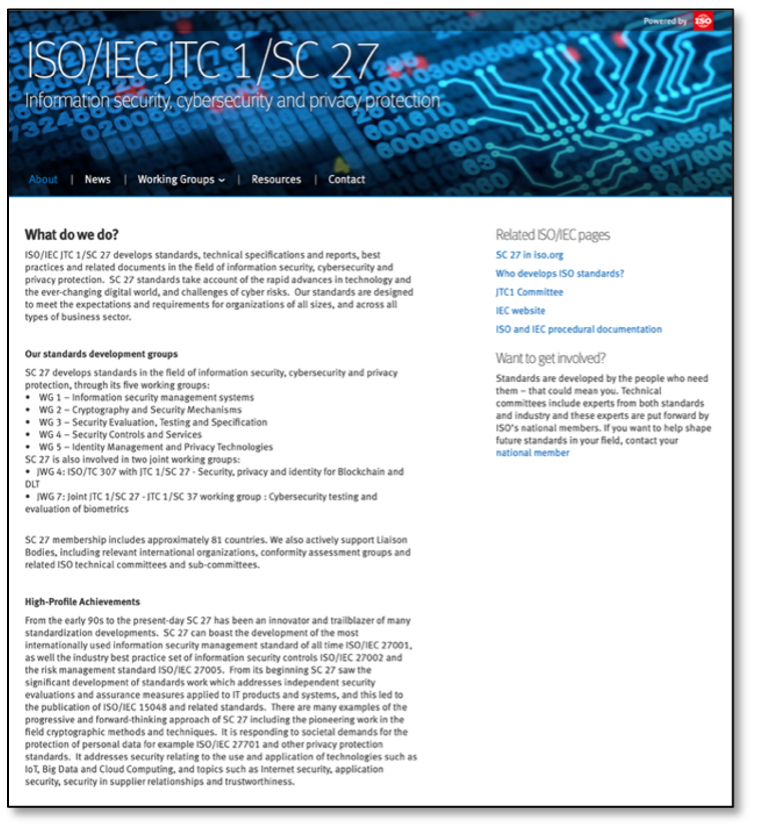 Over the last 35 years there have been many changes including advances in digital technology, adoption of digital transformation by businesses world-wide, smarter ways of doing business using on-line connectivity and mobile devices, growth and diversity in the cyber-risk landscape, and more legislation dealing with cybersecurity and privacy. SC 27 during this during period have played a leading role in delivering world-class standards to address these developments and to make sure that the standards it produces are kept up to date as further changes have emerged. The SC 27 is an international community of professionals from industry, academia and government. This community covers expertise from many market sectors, business interests, academic and research fields and have shaped the requirements for trust, resilience and protection in this digital age. This international community of professionals has delivered standards to meet the needs of today’s digital world and to manage and mitigate the growing variety of cyber threats and risks.
Congratulations are due to all in the SC 27 community both present and past members, who through international cooperation, teamwork and consensus, have shaped the requirements for trust, resilience and protection in this digital age.
Finally, I would like to say it has been an absolute pleasure to have been a member of this global cybersecurity and privacy community, from the very beginning in 1990, through to the present day and for years yet to come.
For more details about SC 27 see https://committee.iso.org/home/jtc1sc27
Dr Edward HUMPHREYS
Holiday season around the globe
ISO/IEC JTC 1 is truly a global family! Our members are spread across the globe, enjoying summer beaches in the Northern Hemisphere, embracing winter traditions in Southern nations, celebrating vibrant festivals in Eastern countries, experiencing diverse seasonal rhythms in Western countries and marking special regional holidays in the Middle East, Africa and the Americas.
 At any given moment, some of our JTC 1 family are basking in summer sunshine while others are wrapped up in winter snow. Some are enjoying tropical holidays, while others are cosy by the fire. Yet no matter where we are on this beautiful planet, or what season we are experiencing, we are all united by the same mission: to develop world-class standards that benefit everyone, everywhere. So, whether you’re reading this newsletter while sipping a cold drink on a warm beach or enjoying hot chocolate by a snowy window, remember that you are part of something truly global: a special community that transcends borders, seasons, and time zones. Happy holidays from all of us at JTC 1, whichever corner of the world you may be! 🌍🏖️❄️
Amanda Suo
Plenary season is also upon us, with many SCs coming together virtually and fact-to-face for intensive talks, including SC 22, SC 27, SC 38 and SC 44. Plenary highlights documents for some of these SCs will be posted.
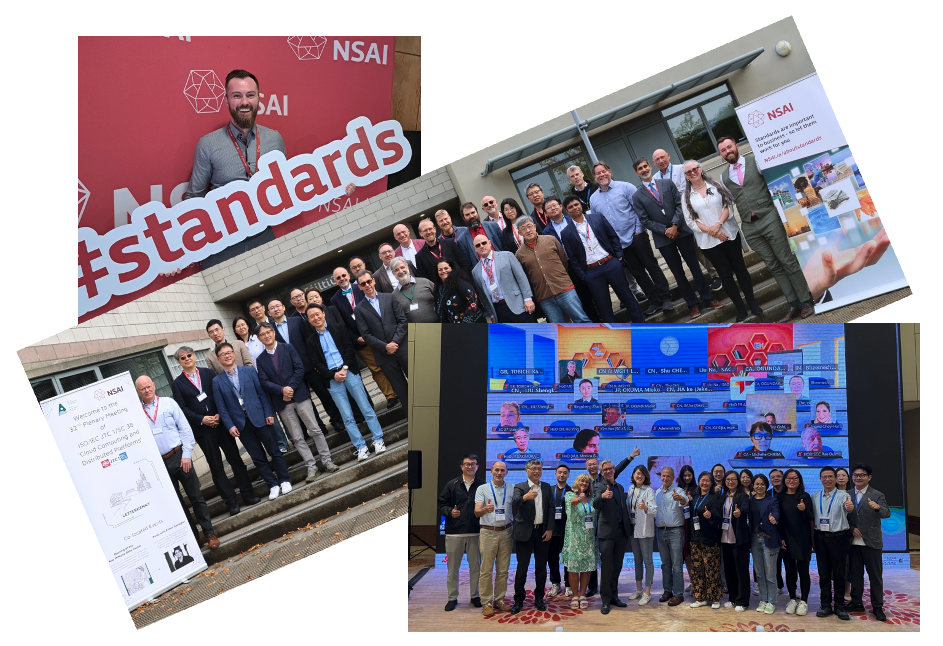
SC 38 – Letterkenny, Ireland / SC 44 Kunming, China
We very much appreciate all the input from all of our contributors to this quarter’s newsletter and the AG 1 team for getting it ready, and don’t forget that you can submit articles to be included in the next quarterly newsletter by emailing us directly or by using the online submission form at JTC1info.org, we’d love to hear from you.
Deadline for the contributions to the Q4 newsletter is December 12th 2025.
Recent Comments