

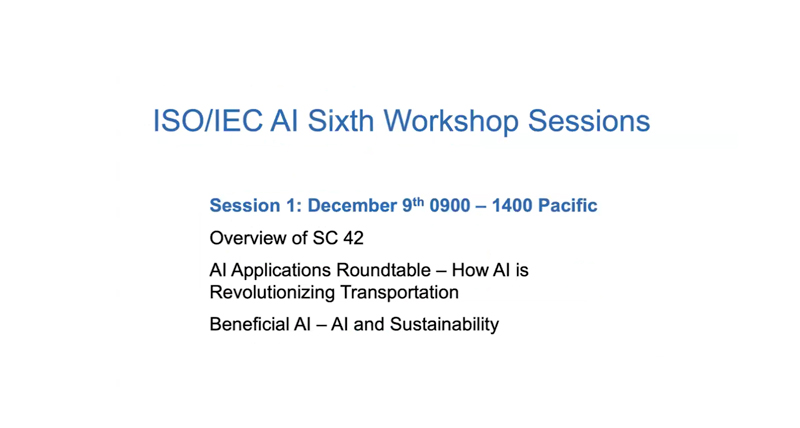
ISO/IEC AI workshop sessions
on 09 and 11 December

Video recordings of the two sessions

Presentations
9 th December 09:00 – 14:00 Pacific Daylight Time
Kick-off
Wael William Diab
Opening Remarks
Sergio Mujica
Overview of ISO/IEC JTC 1/SC 42
Wael William Diab
AI Applications – How AI is Revolutionizing Transportation
Philipp Oser – Driving AI with Confidence: Enabling Intelligent
Vehicle Systems
Jae Yong Lee
Simon Burton
Alexander Carballo Segura
Neil Frost – Intelligent Transport
Systems – AI and Big Data Use cases
Beneficial AI – AI and Sustainability
Marc Fiammante – Transforming Healthcare: Insights from AI Projects
Enrico Panai – Sustainable AI – The Establishment of a New Old
Profession
Ludovic Arga – AI Climat impact –
Presentation
Segolene Dessertine-Panhard(TBC)
Arnault Louhalalen – Benefit AI Defense and Intelligence
Praveen Paritosh – Transforming
Medical Screening with AI Interviewers
11 th December 09:00 – 14:00 Pacific Daylight Time
Kick-off
Wael William Diab
Novel AI Standardization Approaches
Susanne Kuch, Lenora Zimmerman – Demystifying certification in the realm of AI
Riccardo Mariani – International standards portfolio for the AI Functional Safety
Eric Southerland – Establishing terminology and
concepts at the intersection of AI and Health
Lauriane Aufrant – Natural Language Processing: international standards to bridge the old and the new –
Presentation
Kim Lucy – Implementing ISO/IEC 42001: Benefits and guidance across industries and regions
Q&A
Emerging AI Technology Trends and Requirements – AI Safety, Evaluation and Testing
Samir Chhabra
Prof. Lam
Young Im Cho
Mr. Hiramoto
Jong-Won Kwon
Chris Meserole
Peter Mattson
Q&A
Closing Remarks
Program Committee
Moderators: Norbert Bensalem, Peter Deussen, Rohit Israni and Wael William Diab
Speakers

Arnault Ioualalen, CEO of Numalis
Dr. Arnault IOUALALEN holds a Ph.D. in Computer Science (2012), following dual Master’s degrees in Computer Science Research (2007) and Mathematical Research (2009). After research and teaching experience at the University of Perpignan, he co-founded Numalis in 2015, a Montpellier-based deep tech company specializing in explainability and robustness validation software for Artificial Intelligence algorithms using formal methods.
Recognized member of high-level expert groups, he plays a valuable role at an international level on trustworthy AI by being the editor of the ISO/IEC 24029 suite of standards, which defines the validation of AI robustness through formal methods. Additionally, he is a contributor to the CEN/CENELEC Trustworthy AI Framework which forms the foundation for the implementation of the European AI regulation, the AI-Act.
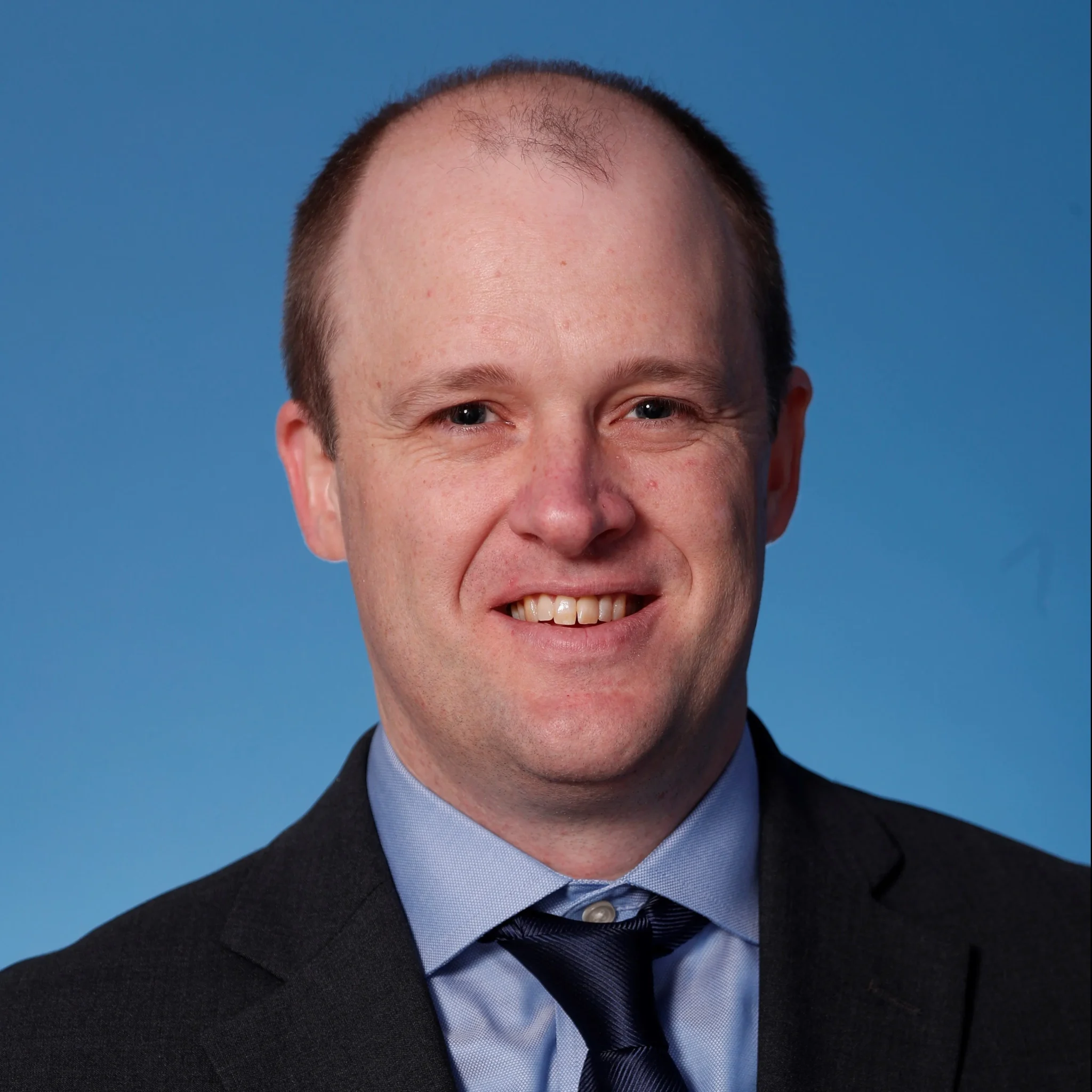
Chris Meserole, Executive Director at Frontier Model Forum
Chris Meserole is the Executive Director of the Frontier Model Forum and an expert on AI safety, international governance, and global cooperation. He is currently focused on the development of standards and best practices for AI safety and evaluation, particularly for advanced models whose capability profile remains unknown.
Prior to the Frontier Model Forum, Chris served as Director of the AI and Emerging Technology Initiative at the Brookings Institution and a fellow in its Foreign Policy program. Established in 2018, the Initiative has aimed to advance the responsible governance of AI by supporting a wide range of high-profile efforts across Brookings, from research on the impact of AI on bias and discrimination to its implications for global inequality and democratic legitimacy.
In his own work, Meserole has worked extensively on safeguarding large-scale AI systems against the risks of accidental or malicious use. Among other efforts, Meserole has co-led the first global multi-stakeholder group on recommendation algorithms and violent extremism for the Global Internet Forum on Counter Terrorism; published and testified on the challenges posed by AI-enabled surveillance and repression; and organized a US-China track 2 dialogue on AI and national security, with a focus on AI safety and testing and evaluation. As a member of the Christchurch Call Advisory Network, he also opened the session on algorithmic transparency at the 2022 Christchurch Call Leadership Summit chaired by President Macron and Prime Minister Ardern.
Meserole has a background in interpretable machine learning and computational social science. He has regularly advised high-level government, industry and civil society leaders and his research has appeared or been featured in the New Yorker, New York Times, Foreign Affairs, Foreign Policy, Wired, and other publications.
“We’re excited to work together with other leading companies, sharing technical expertise to promote responsible AI innovation. We’re all going to need to work together to make sure AI benefits everyone.”
Kent Walker, President, Global Affairs, Google & Alphabet
“Companies creating AI technology have a responsibility to ensure that it is safe, secure, and remains under human control. This initiative is a vital step to bring the tech sector together in advancing AI responsibly and tackling the challenges so that it benefits all of humanity.”
Brad Smith, Vice Chair & President, Microsoft
“Advanced AI technologies have the potential to profoundly benefit society, and the ability to achieve this potential requires oversight and governance. It is vital that AI companies–especially those working on the most powerful models–align on common ground and advance thoughtful and adaptable safety practices to ensure powerful AI tools have the broadest benefit possible. This is urgent work and this forum is well-positioned to act quickly to advance the state of AI safety.”
Anna Makanju, Vice President of Global Affairs, OpenAI
“Anthropic believes that AI has the potential to fundamentally change how the world works. We are excited to collaborate with industry, civil society, government, and academia to promote safe and responsible development of the technology. The Frontier Model Forum will play a vital role in coordinating best practices and sharing research on frontier AI safety.”
Dario Amodei, CEO, Anthropic
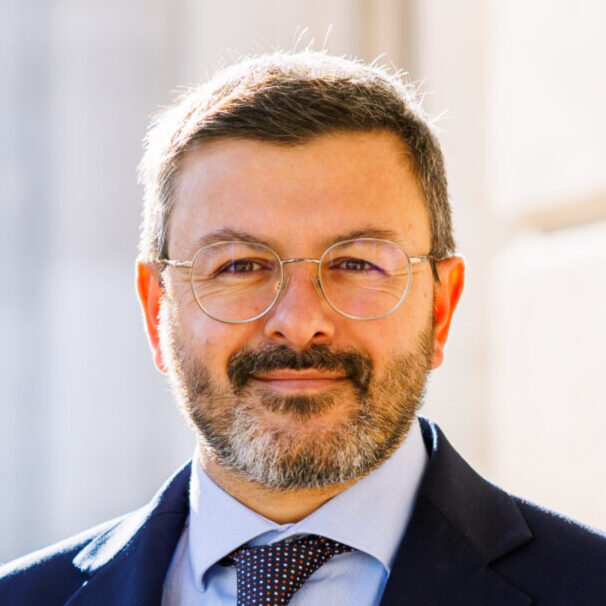
Enrico Panai, President of the Association of AI Ethicists
Enrico Panai is an AI ethicist with a background in philosophy and extensive consulting experience in Italy. He spent seven years as an adjunct professor of Digital Humanities at the University of Sassari. Since moving to France in 2007, he has continued his work as a consultant. In 2017, he studied Strategies for Cyber Security Awareness at the Institut National de Hautes Études de la Sécurité et de la Justice in Paris. Holding a PhD in Cybergeography and AI Ethics, he is the founder of the consultancy BeEthical.be.
He serves as a professor of Responsible AI at EMlyon Business School, ISEP in Paris, and La Cattolica in Milan. Additionally, he is the president of the Association of AI Ethicists. Currently, his main role is as an officer of the French Standardization Committee for AI and convenor of the working group on fundamental and societal aspects of AI at the European CEN-CENELEC JTC21—the European standardization body focused on producing deliverables that address European market and societal needs. Among the core standards managed are Trustworthiness of AI, Competences of professional AI ethicists and Suistainable AI.
His latest book, published in Italian and French, is entitled ”The Ethics of Artificial Intelligence Explained to My Son.”

Kimberly Lucy, Director of GRC Standard, Microsoft
Kim Lucy is a Director of GRC Standards at Microsoft, where she has worked for over a decade. She began her career at E&Y performing info security auditing and consulting. Kim has practical experience implementing and auditing security and privacy standards for diverse organizations, and now works as part of Microsoft’s Corporate Standards Group, participating in ISO standards committees to help develop, draft, and revise international standards for artificial intelligence, privacy, and cybersecurity.
She is particularly interested in the alignment of international standards to regulatory and legal frameworks for emerging technologies such as artificial intelligence, and how organizations can leverage these standards for regulatory compliance.
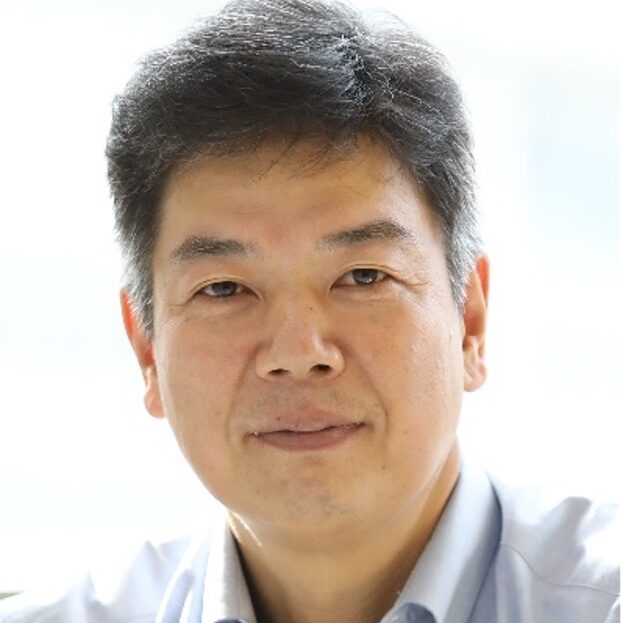
Kenji HIRAMOTO, Head of Digital Infrastructure Center – Information Technology Promotion Agency, Japan / Executive officer for International Data Strategy, Digital Agency, Government of Japan
He started his career in IT and consulting companies. He worked in the Ministry of Economy, Trade and Industry, the Cabinet Secretariat and the Digital Agency. His achievements include the National Data Strategy and the Government Interoperability Framework. Since 2023, he has overseen the entire digital infrastructure, including software engineering, at the IT Promotion Agency(IPA). Since February 2024, he has also been working on ensuring the safety of AI at AISI.
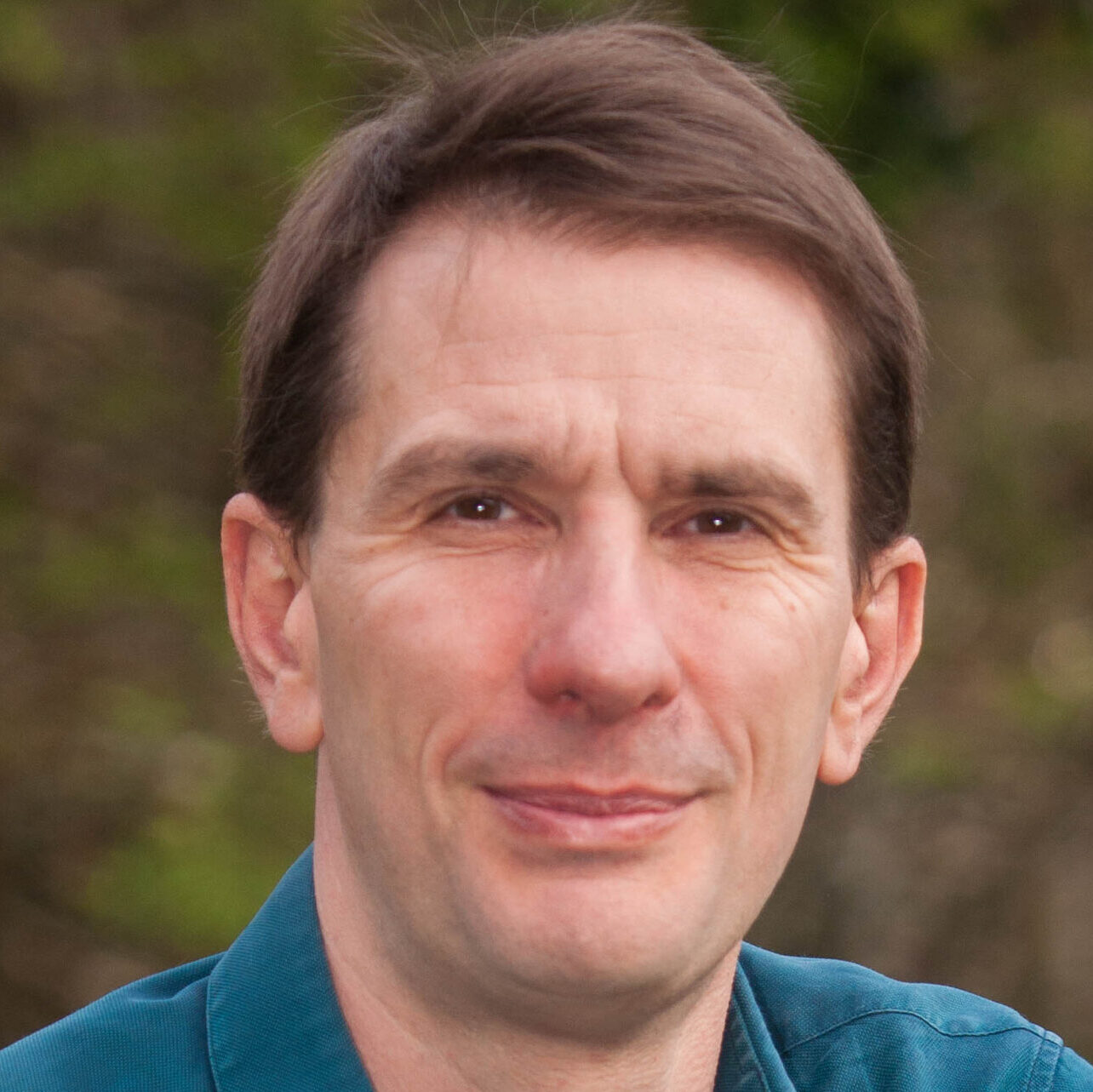
Ludovic Arga, scientific advisor on climate and energy issues for Orange.
Ludovic Arga is a scientific advisor on climate and energy issues for Orange. In his work on data and AI, he has modeled the electricity consumption of heterogeneous mobile networks.
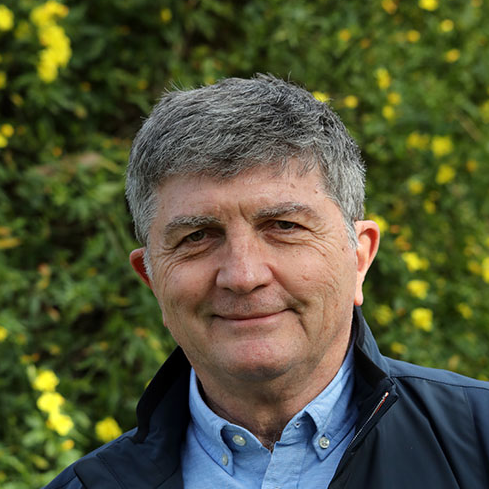
Marc Fiammante, retired IBM Fellow, Artificial Intelligence Expert
Marc Fiammante, is a retired IBM Fellow, Artificial Intelligence Expert, and since 2022 PhD student at the Brain Institute on the automatic analysis of the EEG signal for the diagnostic evaluation of brain lesions in full-term newborns, in a context of perinatal asphyxia. He is author in this context of an invention file as patent in March 2024 by Paris Hospitals.
Marc holds 19 patents and wrote 2 books.
He has been convenor of the ad hoc group Sustainable Artificial Intelligence at the official European standards bodies CEN and CENELEC JTC 21, and is listed contributor to AFNOR France standards body spec 2201 digital services ecodesign and spec 2314 frugal AI.
Marc graduated as engineer from the Ecole Centrale de Paris in 1979
Healthcare projects pointers:
• Artificial intelligence solution to classify pulmonary nodules on CT
• My company team provided software, hardware and flow https://www.sciencedirect.com/science/article/pii/S2211568420302497
• EEG-based decision tool for neonatal therapeutic hypothermia in hypoxic-ischemic encephalopathy
• Invented new signal processing, patent filed by Paris Hospitals https://arxiv.org/abs/2403.20239
• Video with English subtitles https://www.linkedin.com/posts/marc-fiammante_ai4good-activity-7216780646944292864-CSxy
• Helping Cardiologists with characteristics of Vegetations on Cardiac valves after infectious endocarditis
• Initial work preprint “A simple tool for Visualizing Time Sections of Transesophageal Echocardiography with Python” https://medrxiv.org/cgi/content/short/2024.11.26.24317630v1
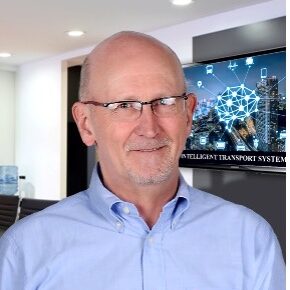
Neil Frost, CEO of iSAHA. Convenor of ISO TC 204/WG 20 Big Data and Artificial Intelligence supporting ITS
Neil Frost is CEO of iSAHA and a seasoned business and management consultant and holds a master’s in business leadership (MBL) and has a bachelor’s degree in computer science and Mathematical Statistics making data analysis one of his specialities. He has been actively involved in the public transport industry and for more than 25 years, of which 15 years were on an international platform in ITS applications in transport and health.
Neil has done extensive work in all modes of transport as team leader, both subsidised (rail and bus) and non-subsidized public transport, namely the minibus taxi industry in South Africa. Neil’s involvement with the minibus taxi industry goes back as far as advising the South African National Department of Transport on the early minibus taxi recapitalization process and has in recent years branched out to include the preparation of business cases and business value calculations of minibus taxi routes affected by the national BRT program on behalf of the Tshwane and Mangaung metros as well as the CSIR.
Neil and his team have pioneered and developed a data analyses and business evaluation model for the calculation of operating license values that has now been accepted by the minibus taxi industry as one of the most accurate and industry acceptable standards for business value negotiations utilized in business restructuring.
Neil is currently Convenor of the TC 204 WG 20 on Big Data and Artificial Intelligence and is an expert working on AFC and Account based ticketing, EMV integration in payment systems and Intelligent Mobility that includes the utilisation of new technologies (such as alternative payment methods) in the transport ITS space. These are new trends and requirements to enable the introduction of Cooperative ITS and the Autonomous Vehicle that are expected to start becoming a reality in North America, Europe and Japan in the next 5 to 10 years. Neil is also advising in the total integration of systems and data for Transport for the Gauteng Provincial Government and is being consulted on Big Data projects in Germany, Pakistan (Karachi and Peshawar), Australia, New Zealand and North America.
Neil has been involved in AFC in all spheres of government in South Africa. He designed and specified the AFC system for Gautrain (he has also been involved in the auditing and useful end of life determination of this system), he designed the specifications and provided transaction advisory services for the Rea Vaya and Tshwane AFC BRT systems. This work included the business aspects of fare policy and rules determination and implementation together with the business processes. Use cases where also developed for the testing and implementation of the systems to ensure a match between technology and business requirements.
Neil pioneered an Enterprise Architecture for a fully integrated Intelligent Transport System for the City of Cape Town including the development of a detailed Blueprint and technology road map for the implementation of the system including the required Business Processes down to Level 3. A similar project developed by Neil was the One ticket for all, data integration and data analytics project for the Gauteng Transport Commission. Currently Neil is advising the City of Cape Town on new generation technology to enhance and facilitate integrated transport and smart payment systems across transport modes.
Neil has in-depth Enterprise Architecture experience in Transport and Health. The basic structure of the Enterprise Architecture he helped developed is now accepted as a base architecture for ISO TC 204 Big Data and AI planning.

Peter Mattson, PhD, is the President of the Board of the MLCommons Association, a board member at the AI Verify Foundation, and a Senior Staff Engineer at Google
Peter Mattson, PhD, is the President of the Board of the MLCommons Association, a board member at the AI Verify Foundation, and a Senior Staff Engineer at Google. On the MLCommons board, he sits on the Compensation and Diversity, Equity, and Inclusion (DEI) committees. Dr. Mattson is also actively involved in the technical leadership of MLCommons, where he is currently Co-chair of the MLCommons AI Safety Benchmarking Working Group. In this role, Dr. Mattson is leading the effort to define global standard benchmarks for AI safety; he has given invited briefings on the effort to the NTIA, NIST, OSTP, US AISI, EU AI Office, and Singapore’s IMDA. He previously co-founded the working groups for the MLPerf hardware speed benchmark, the MedPerf federated evaluation platform for healthcare, and the Croissant dataset metadata format.
Dr. Mattson’s research focuses on evaluating the safety, quality and effectiveness of models and understanding how improving datasets can drive better training and evaluation. He is actively involved in the program committees of NeurIPS Datasets and Benchmarks track and the ICML DMLR workshop, as well as serving as a founding editor of the Journal of Data Central Machine Learning. Dr. Mattson sits on the National Science Foundation’s Advisory Committee for Cyberinfrastructure. Previously, he led the Programming Systems and Applications Group at Nvidia Research, was VP of software infrastructure for Stream Processors Inc (SPI), and was a managing engineer at Reservoir Labs.
Dr Mattson earned his PhD in electrical engineering from Stanford University, as well as a Master’s degree in electrical engineering. While there, he received concurrent National Science Foundation and Stanford Graduate Fellowships. He also earned a Bachelor of Science degree in electrical engineering from the University of Washington.
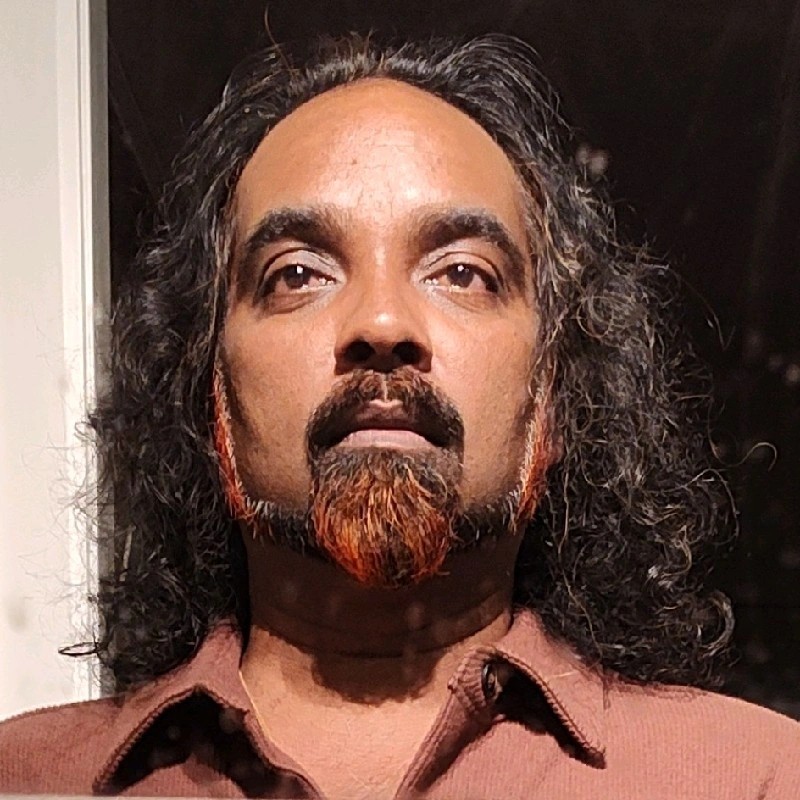
Praveen Paritosh, founder of system2.ai, building voice interviewing technology
Praveen Paritosh is the founder of system2.ai, building voice interviewing technology. He is the Strategic Research Advisor for ML Commons and Common Crawl. He was a senior research scientist at Google, leading research on data excellence and evaluation for AI systems for thirteen years. Before that he designed the large-scale human curation systems for Freebase in 2007, which was acquired by Google in 2010. This became the Google Knowledge Graph, now responsible for nearly 50% of all search queries. He has led a grassroots movement in the last five years, culminating in data-centric AI through a series of workshops from ICML 2023/22, NeurIPS 2021, AAAI 2020, TheWebConf 2019, and an upcoming journal on Datasets in Machine Learning Research.
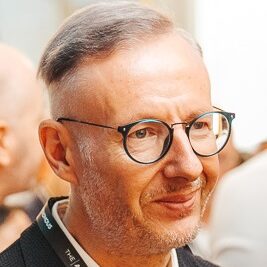
Riccardo Mariani, VP of Industry Safety, NVIDIA
Riccardo Mariani is widely recognized as an expert in functional safety and integrated circuit reliability. In his current role as VP of Industry Safety at NVIDIA, he is responsible for driving safety alignment across NVIDIA’s automotive and embedded business units. To this end, he is responsible for developing cohesive safety strategies and cross-segment safety processes, architecture, and products that can leveraged across NVIDIA’s AI-based hardware and software platforms.
Prior to NVIDIA, he was chief functional safety technologist at Intel Corporation, where he oversaw strategies and technologies for IoT applications that require functional safety, high reliability, and performance, such as autonomous driving, transportation, and industrial systems. Riccardo Mariani is 2022 First VP of IEEE Computer Society and chair of the IEEE Computer Functional Safety Standards Committee.
Mariani spent the bulk of his career as CTO of Yogitech, an industry leader in functional safety technologies. A prolific author and respected inventor in the functional safety field, Mariani has contributed to multiple industry standards efforts throughout his career, including leading the ISO 26262-11 part specific to semiconductors and co-editing ISO/TR 5469 on Artificial Intelligence and Safety. He is the recipient of the 2021 Ron Waxman DASC Meritorious Service Award. He holds a bachelor’s degree in electronic engineering and a Ph.D. in microelectronics from the University of Pisa in Italy.

Samir Chhabra, Director General of Marketplace Framework Policy at Innovation, Science and Economic Development Canada (ISED)
Samir Chhabra is the Director General of Marketplace Framework Policy at Innovation, Science and Economic Development Canada (ISED). In this role, Samir oversees the development of policy advice on the effective functioning of Canada’s marketplaces, including corporate and insolvency law, privacy and data protection, artificial intelligence, intellectual property, and competition law.
More recently, he has been cross-appointed as the Deputy Executive Director of the Canadian Artificial Intelligence Safety Institute (CAISI) to lead the policy, coordination and international engagement functions of the CAISI. Samir has broad experience in public policy development and implementation, having worked at all three Canadian central agencies (Privy Council Office, Department of Finance, Treasury Board Secretariat) as well as with the Department of National Defence, amongst others. He also has significant private sector experience, including as a strategy consultant in London, UK, where he advised organizations including the UK Home Office and large NHS hospitals on service delivery improvement opportunities.
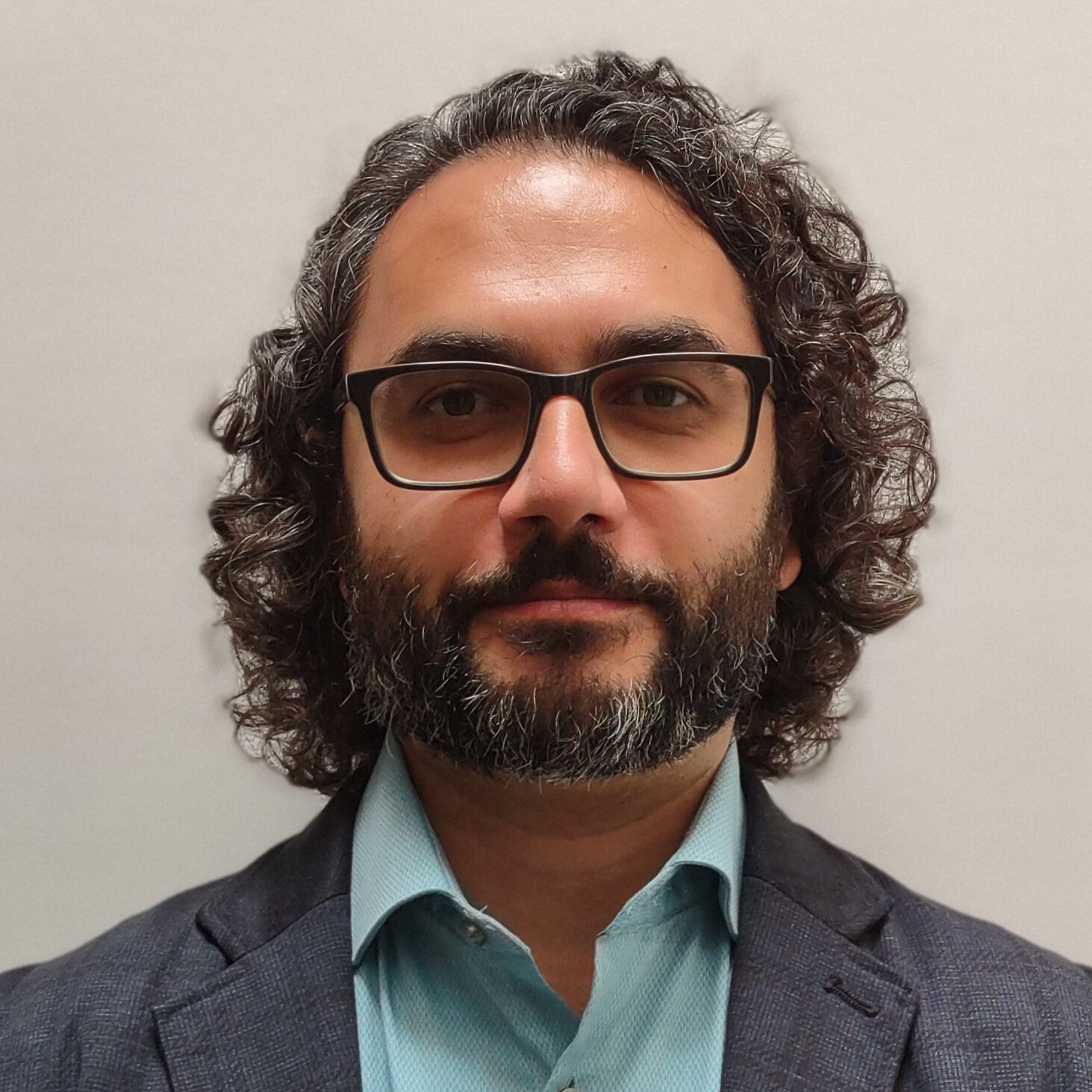
Surdas Mohit, Director in AI policy at Innovation, Science, and Economic Development Canada
Surdas Mohit is a Director in AI policy at Innovation, Science, and Economic Development Canada. He is currently responsible for AI safety policy for the Canadian AI Safety Institute. Prior to joining ISED, Surdas worked at the intersection of science, technology and policy at several government departments, most recently in national security policy at Public Safety Canada. He previously worked in climate change policy and manufacturing policy. He holds a Doctorate in Planetary Science from Washington University in St. Louis.
Young-Im Cho, Professor, Dept at Computer Engineering, Gachon University, South Korea
Professor Young-Im Cho got bachelor’s, master’s, and doctoral degrees in Computer Science from Korea University in South Korea. She got post-Doc. Degree at University of Massachusetts at Amherst at 2000 in USA. Now she is a Chief of AI and Smart City Laboratory at Gachon University and Intelligent Service Robot Automation System Society.
Currently, she is a Head of Delegation of ISO/IEC JTC 1/SC 42 Artificial Intelligence, a convenor of ISO/IEC JTC 1/SC 43 WG 5 BCI data, and an expert of ISO/IEC TC 268 smart city. Also, she serves as the Chair of the Standards Subcommittee for the AI New Industry Committee under the Ministry of Trade, Industry and Energy, and as the Chair of the SC 42 Korean Mirror Committee. She is a Project Editor for SC 42/WG 5, working on guidance on lightweight AI systems and hybrid AI inference frameworks.
She is a committee member of National R&D Council under Korea President from 2023, and ex-committee member of smart city in the 4th Industrial revolution under Korea President from 2017-2022.
She was a visiting professor at Purdue University in USA from 2013 to 2014. She has published more than 600 publications including Journals, conferences. Also she has published 23 text and reference books. She received a big medal from Korea Government at 2013, 2023 and 20 more academic awards from academic societies. She is a member of more than 50 editorial boards of international journals and conferences. Her interesting areas are Artificial Intelligence, Brain Computer Interface, Smart City, Big Data and Cloud Service Robot etc.
She is working on projects such as “Standardization for AI inference framework“, “Standardization for AI lightweight modelling guidance”, “Standardization for BCI and AI convergence” and some related standard projects in Korea. He is currently a senior member of the IEEE and a senior member of the ACM.
Moderators
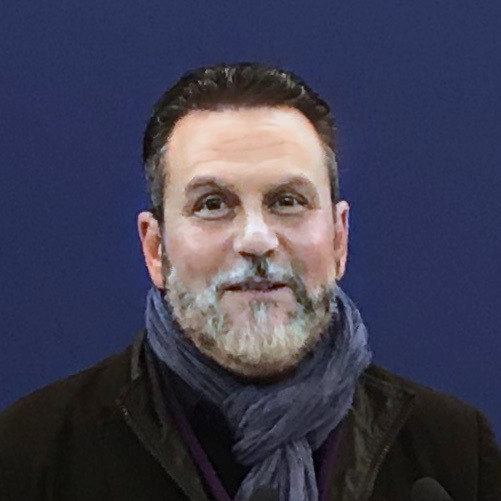
Norbert Bensalem, Technical Relation Executive IBM France
Overview
Over 22 years’ experience in ICT industry, including more than 10 years focusing on Sales and Customer Relationship & Satisfaction. Previous experience in the pharmaceutical industry with a strong focus on processes consolidation
and standardization.
Standardization involvement
Member of AFNOR and ISO/IEC JTC1 since June 2011
Roles
2016- present, AFNOR
• Chairman of the French JTC1 mirror committee GCTI
• Head of the French delegation in international meetings
• Member of an AFNOR steering group COS ICN Information et Communication Numérique
2018- present, ISO/IEC JTC 1 SC 42
• IEC ACOS TF On Collaborative safety rep
• Workshop series committee member
2020- present, ISO/IEC JTC1
• IEC SEG 13 Consortia rep
2014- present, ISO/IEC JTC1
• JTC1 PAS Mentor (OASIS,W3C,GS1, TOG)
2016- present, ISO/IEC JTC1
• JTC1 AG 14 Systems Integration Facilitation (SIF) Convenor
2014-2015, ISO/IEC JTC1
•Member of ISO/TMB SAG on Smart Cities
2011- present ISO/IEC JTC 1
• Technical contributor to several ISO/IEC JTC1 SCs
(SC27 Security, SC38 Cloud & SOA, SC 41 IoT & Digital twin, SC 42 AI, WG 11 Smart Cities)

Peter Deussen, Microsoft National Standards Officer
Peter Deussen assumes the position of the Microsoft National Standards Officer for Germany. In this capacity, he is one of the chairs of the German DIN Committee for Artificial Intelligence.
Peter is Editor of various International Standards, including specifications on Risk Management for Artificial Intelligence, and Artificial Intelligence Impact Assessment. Peter is active in various European and international standardization committees, including ISO/IEC JTC 1, its subcommittees SC 27, SC 38 and SC 42, and CEN-CENELC/JTC 21.
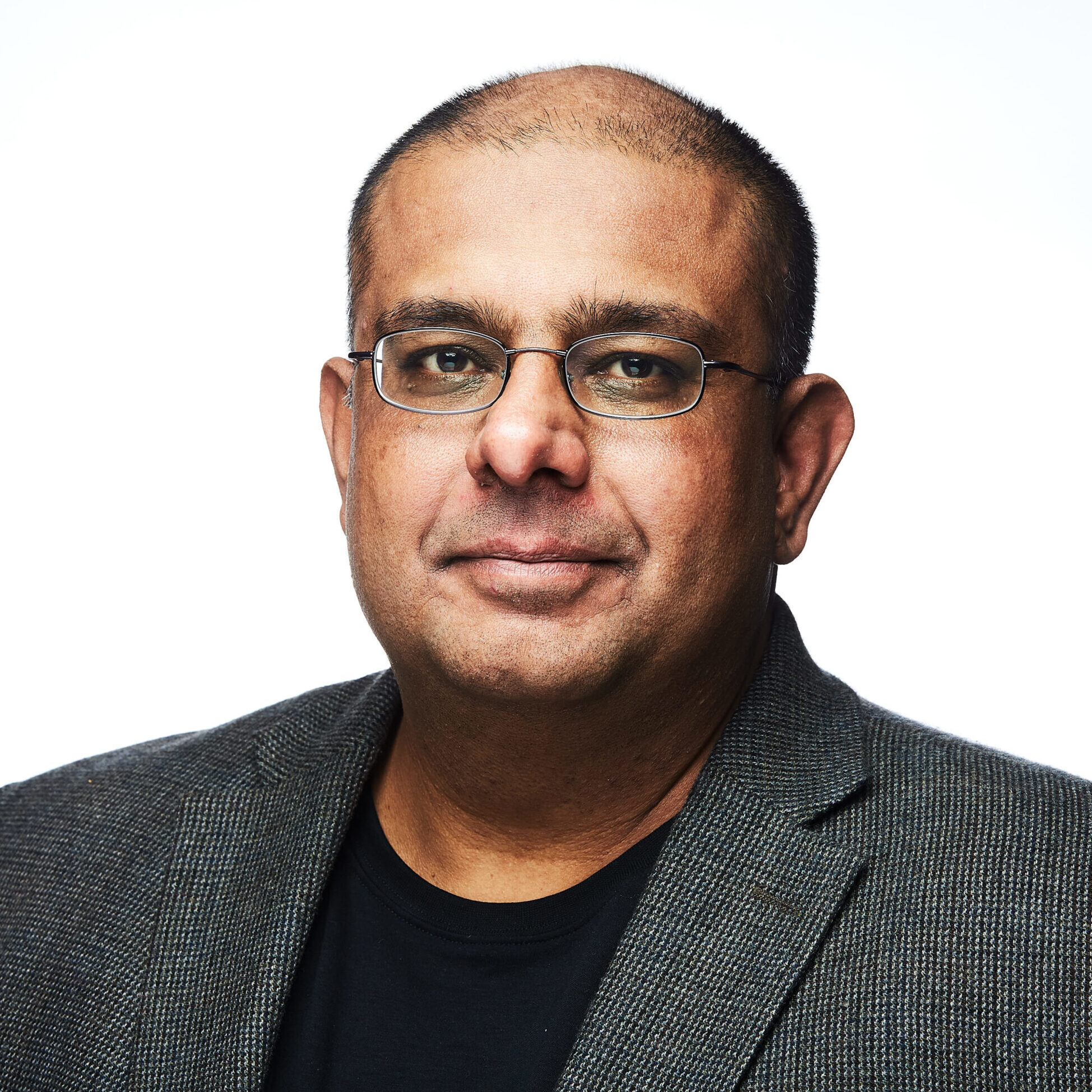
Rohit Israni, Director Cloud and AI Ecosystem Enabling, Intel & Chair INCITS/Artificial Intelligence
Rohit Israni is currently Director Cloud and AI Ecosystem Enabling in the Cloud and Enterprise Solutions Group at Intel. He leads inorganic initiatives and developer relations for Cloud/AI. Earlier, he cofounded the Intel AI Academy and the Intel AI Builder program chartered with bringing Intel’s AI initiatives to leading universities and ISVs world-wide. He is the Chair of INCITS/Artificial Intelligence, the US TAG to SC 42.
Rohit has 20 years of experience in engineering, new product innovation, strategy, finance and business development in a variety of organizations. Prior to his current role, Rohit was responsible for the development of the ecosystem for depth photography for Intel’s RealSense initiatives. Rohit led a collaboration between Intel and Google engineers to create an open standard called XDM (eXtensible Device Metadata) released at www.xdm.org and then taken to JPEG.
Rohit’s prior technical background is in AI and he worked at Imaging Technology (M&A Dalsa), a spinoff from MIT’s AI Lab and one of the survivors of the second winter of AI and at KLA-Tencor, leading semiconductor equipment company, in developing machine learning and computer vision algorithms. He has 2 patents in pattern recognition and machine learning.
Rohit holds a Masters’ degree in Engineering with a specialization in Robotics and AI from Tulane University. He also holds a Master’s degree in Management Science & Engineering with a focus on Entrepreneurship from Stanford University.
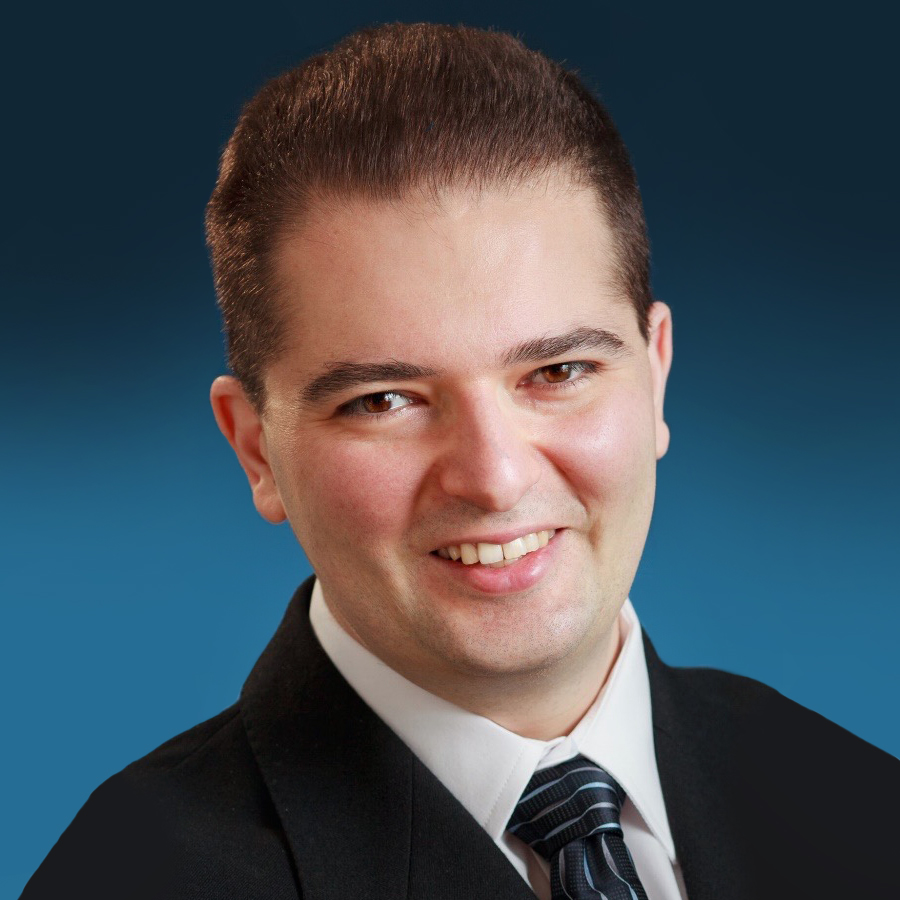
Wael William Diab, Chair of ISO/IEC JTC 1/SC 42 (Artificial Intelligence)
Wael William Diab is a business and technology strategist with more than twenty years of executive experience at Fortune 500 companies in Silicon Valley. He is a prolific inventor with more than 900 patents to his name in the ICT field and an industry recognized expert on digital transformation. Skilled in leadership for breakout technology, Diab has architected strategy, driven industry-wide initiatives, cultivated partnerships, identified M&A