

Introduction
The second quarter of 2026 has been packed with momentum across JTC 1, bringing significant achievements that continue to shape the global standards landscape on information technology. This edition highlights key outcomes from the JTC 1 Plenary, progress on gender-responsive standards, celebrations marking the anniversary of the subcommittee “Automatic identification and data capture techniques” (SC 31), and important developments in barcode and automatic identification technologies. We also explore the growing impact of digital books and examine emerging perspectives on preserving challenge and innovation in the digital age, and provide an update on the publication of the single aligned edition of the ISO/IEC Directives Part 1. Together, these stories showcase the innovation, collaboration, and forward-thinking leadership driving the international standards community into the future.
JTC 1 plenary – Sao Paulo, Brazil
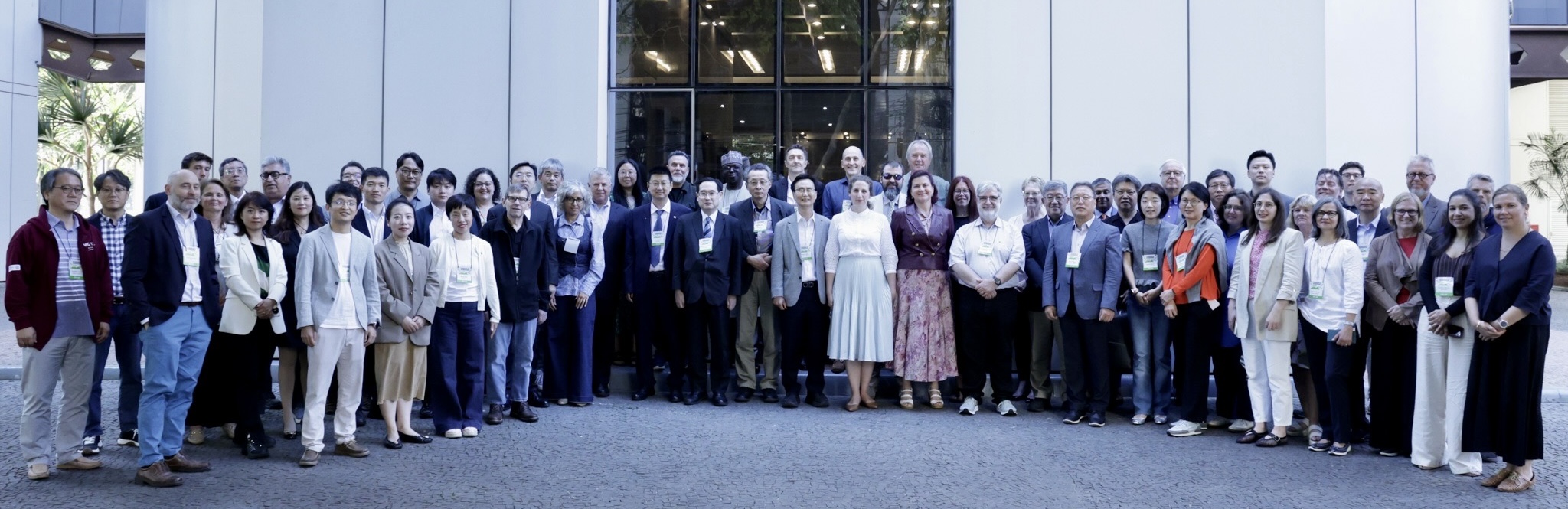
| JTC 1 had the pleasure to be invited to Sao Paulo, Brazil to hold its early 2026 plenary meeting hosted by The Associação Brasileira de Normas Técnicas (ABNT) and NIC.br. The Plenary approved a series of resolutions focused on strengthening coordination, identifying future standardization opportunities, and improving the effectiveness of JTC 1 operations. A major decision was to assign responsibility for resource-efficient software to the subcommittee on Sustainability, IT and data centres (SC 39), working closely with subcommittees on Software and systems engineering (SC 7) and Artificial intelligence (SC 42), with development of a Technical Report commencing in 2026 and progress reports scheduled throughout the year. |  |
To support future strategic planning, JTC 1 agreed to launch a comprehensive survey of National Bodies and JTC 1 groups to identify emerging areas for standardization and future work priorities.
Several groups were established or renewed to address strategic topics. The ad hoc group on Online Standards Development (OSD) was reconstituted to collect best practices and recommend improvements to the OSD platform. Another ad hoc group was renewed to further analyse neuromorphic computing systems and recommend future standardization structures and work areas. A new ad hoc group on Horizontal Function was established to develop a proposal for identifying committees that serve cross-cutting functions across standards activities.
The former Metaverse Coordination Study Group was reconstituted as Advisory Group 23, with an expanded mandate to coordinate metaverse and virtual-world standardization activities across JTC 1, maintain a strategic roadmap, review new projects and strengthen collaboration with external organizations.
Overall, the meeting focused on improving coordination across JTC 1, addressing emerging technologies such as neuromorphic computing and metaverse systems, enhancing standards development processes, and preparing the organization for future strategic growth and new standardization opportunities.
JTC 1/AG 1 Communications
SC 27 Advances Gender‑Responsive Standards under ISO Strategy 2030
The JTC 1/SC 27 Gender‑Responsive Standards (GRS) Workshop, held on 10 March 2026 in Nuremberg, Germany, alongside the SC 27 Plenary and synchronised working group meetings, reaffirmed the committee’s commitment to achieving gender diversity, as well as the development of GRS in line with ISO/IEC GRS guidance
Ms Anna Gallet, ISO Diversity & Inclusion (D&I) Project Manager, explained that under ISO Strategy 2030’s objective of “All voices heard,” an ISO Diversity & Inclusion (D&I) Strategy is being developed along an update to the D&I Programme. She highlighted that SC 27 is currently the first and only ISO committee with an established Gender Action Plan (GAP). The SC 27 GAP is aligned with the ISO GAP 2024–2025, which focuses on increasing gender‑balanced participation in technical committees and ensuring that standards are developed by incorporating both women’s and men’s perspectives (see Figure 1).
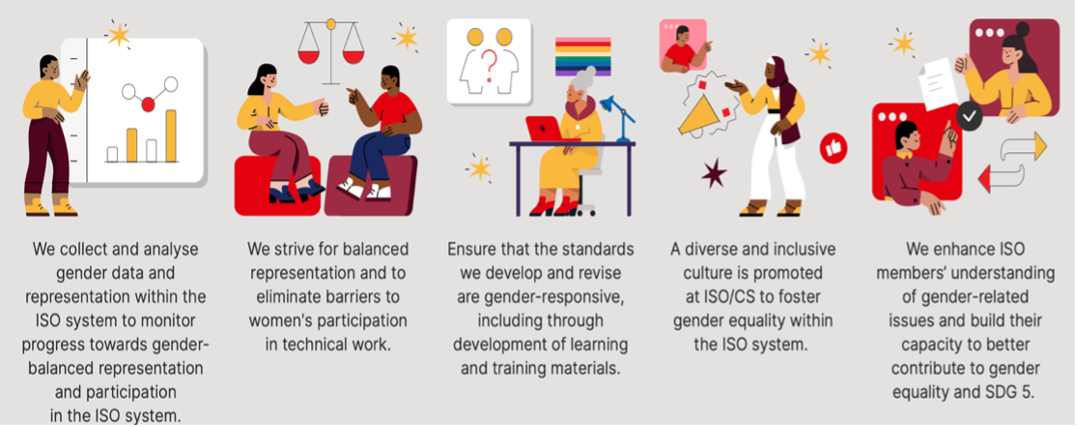 |
[1]Figure 1. ISO GAP 2024–2025
The keynote speaker Dr Michelle Parkouda, Chair of the UNECE WP6 Team of Specialists on Gender‑Responsive Standards and Co‑convenor of the ISO/IEC Joint Strategic Advisory Group on GRS, as well as member of IEC’s Diversity Advisory Committee (DAC), outlined the concept of gender‑responsive standards and their significance.
She illustrated how insufficient consideration of gender perspectives can lead to unintended outcomes, drawing examples from security and privacy challenges associated with digital twins, geolocation technologies, and brain–computer interfaces (BCIs). Participants were encouraged to utilise the UNECE guidelines and ISO/IEC guidance on developing gender‑responsive standards, which emphasise the importance of beginning with the assumption that gender differences may exist, even where they are not immediately apparent.
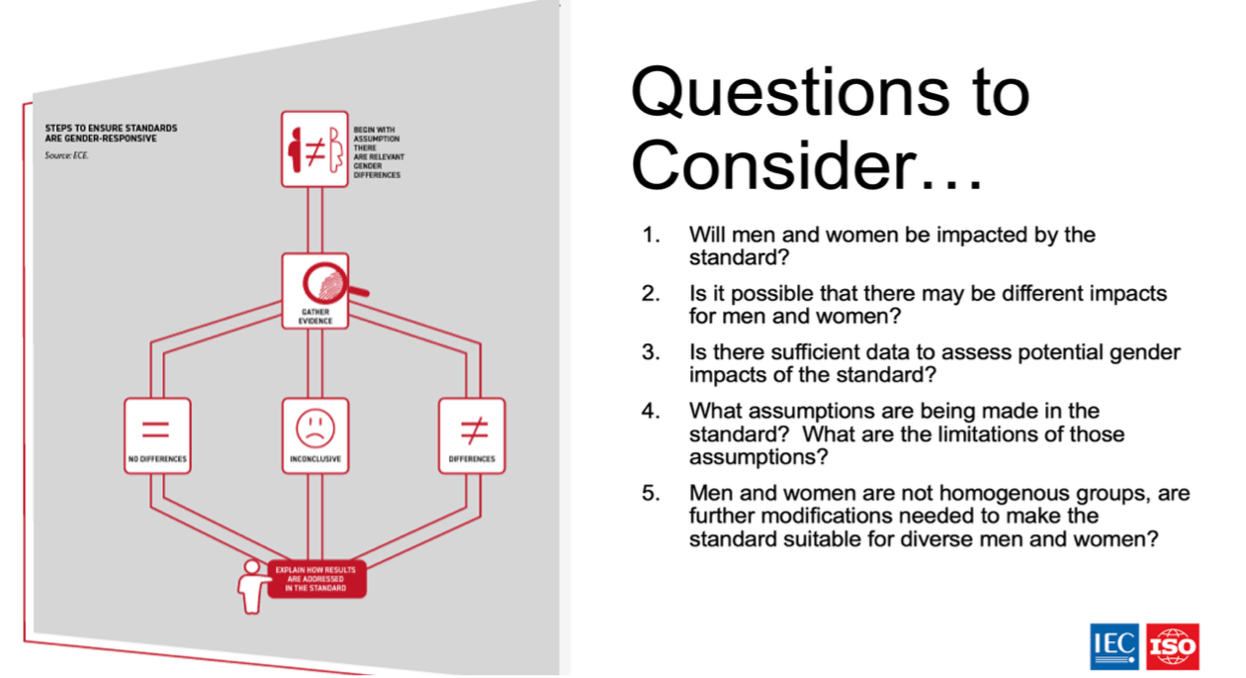
Figure 3. Dr Michelle Parkouda on key considerations for inclusive standards development
The workshop brought together 90 participants (28 attending in person and 62 participating virtually) from a broad range of working groups and member nations. The session was characterised by strong engagement and evidence of immediate application, with participants actively applying the practical knowledge and skills gained during subsequent working group discussions.
Gargi Keeni
Celebrating the 30th Anniversary of Automatic identification and data capture techniques (ISO/IEC JTC 1/SC 31)
Every day, billions of barcodes are scanned at checkout counters, on hospital wristbands, on airport boarding passes, and on parcels winding their way across continents. Since 1996, SC 31 has been chartered to standardise the “data formats, data syntax, data structures, data encoding, and technologies for the process of automatic identification and data capture.”
The committee’s work contributes to several United Nations Sustainable Development Goals (SDGs), including SDG 3 (good health and well-being), SDG 9 (industry, innovation and infrastructure), SDG 11 (sustainable cities and communities), SDG 12 (responsible consumption and production), and SDG 13 (climate action).
In its early years the committee’s attention was concentrated on bringing order to the bar code symbology landscape and ensuring that data structures could support multi-industry use. Today the committee’s portfolio spans real-time locating systems, sensor-augmented RFID and mobile-device integration. SC 31 standards support digital supply chains, smart logistics, healthcare traceability, industrial automation, and the Internet of Things (IoT).
SC 31’s achievements over three decades have been made possible through global collaboration among national bodies, industry experts, and liaison organizations. As industries continue to evolve toward greater automation, connectivity, and sustainability, the work of SC 31 will remain essential to ensuring interoperability, trust, and efficiency across global markets.
Read the full article here: https://tinyurl.com/SC31-30YearAnniversary
Henri Barthel
Upcoming publication of a single aligned edition of the ISO/IEC Directives part 1
ISO and IEC are finalizing the alignment of their rules and procedures. A single, aligned edition of the ISO/IEC Directives, Part 1 will be published on 1 July 2026 and will enter into force on 5 October 2026.
This edition will replace the current ISO/IEC Directives, Part 1, along with the ISO, IEC and JTC 1 supplements, and will serve as the single reference for the development of International Standards and related documents. It establishes one common set of rules across ISO and IEC, simplifying the system, removing inconsistencies, and providing a clearer and more coherent framework for committees.
Introductory webinars have been announced and available to subscribe to:
- Session 1 (ISO community): 7 July, 15:00 UTC
- Session 2 (ISO community): 9 July, 7:00 UTC
ISO Standards and Policy Team
Digital books: meeting the preservation challenge (SC 34, Document standards)
It is now over 575 years since Johannes Gutenberg brought about a technological revolution in mass communication with his printing establishment in Mainz, Germany. While Gutenberg didn’t invent the printing press, his genius was as pioneer of the use of moveable, re-usable metal type, making it possible to mass-produce books which otherwise were laboriously written out by hand by scribes, a hugely costly process. Within a short period of years Gutenberg’s methods of printing had spread throughout Europe and beyond, leading to a huge growth in literacy, contributing in immeasurable ways to the advancement of both arts and sciences.
If Gutenberg had been able to travel through time five hundred years to the mid twentieth century, he would still have been able to recognise the way that books were being produced, using moveable metal type and printing processes that, although mechanised, transferred ink to paper in much the same way that had been the case in the fifteenth century. It is only within the past seventy-five years that the revolution in information technology has changed out of recognition the way that books – and indeed all forms of textual and graphical communication – are created, mass-produced and distributed.
We now live in a very different world of mass communication by digital means. This has huge benefits in terms of the cost and speed of delivery of information of all kinds, but it also introduces challenges of other kinds. For example it is a huge challenge to ensure that digital books can be preserved and accessed for hundreds of years. This was, with care from librarians, straight forward for printed books and documents. Books and other documents printed throughout history, from the time of Johannes Gutenberg onwards, are preserved in libraries and collections around the world, and will be available to be examined by scholars and others for the foreseeable future. But how is this to be achieved for digital documents?
The adoption of international standards for the representation of digital documents goes a long way to ensuring that they will be accessible over time. Early digital preservation initiatives focused on proxies of print objects, for example PDF scans of journal pages or print-optimized books. For libraries and publishers, this was a logical extension of their approach to the physical artifacts. The multi-part standard ISO 19005 (PDF/A) helps publishers prepare PDF documents for long-term preservation and supports global archives in managing these books. PDF/A specifies a subset of the multi-part PDF standard (ISO 32000), designed for creating preservable documents and, conveniently, also improving accessibility. But PDF is ideally suited to preserving documents in a fixed format, and is less well suited to preserving documents that need to be re-formattable for display on devices of varying dimensions.
In the mid-1980s an international standard had emerged that would enable re-processible, and therefore re-formattable, documents to be represented digitally: the Standard Generalized Markup Language (SGML), published by ISO in 1986 as ISO 8879. SGML provided a basis for the invention of HTML in 1991 by Tim Berners-Lee and others and the development of XML and related technologies by the World Wide Web Consortium (W3C). The programme of International standards developmed is to this day the responsibility of ISO/IEC JTC 1/SC 34 Document description and processing languages.
EPUB, a file format for digital books that can be re-formatted for different reading devices, was first published in 2007 by the International Digital Publishing Forum, an international consortium of publishers which later merged with W3C. EPUB owes much in its design to HTML and XML, is a widely-supported e-book format and is actively being maintained and developed by W3C.
EPUB inevitably has to be complex in order to meet the widest possible range of user needs, and EPUB-formatted books are great for current users. Their text reflows onto mobile devices, they are highly accessible, and can contain dynamic and interactive content.
In 2024 work began to develop an archival standard for EPUB-formatted e-books with the intention behind the new EPUB/A format to ensure the ‘preservability’ of an EPUB e-book. This work was undertaken as a joint project of JTC 1/SC 34 and ISO TC 46/SC 4. The project involves engaging with a wide range of stakeholders including librarians, publishers, digital preservationists, e-book retailers and DRM (Digital Rights Management) system providers. It was essential to understand and incorporate the perspectives of international stakeholders to develop a comprehensive and effective standard.
A key decision in developing the EPUB/A format was to avoid links to external content such as fonts or multimedia. Since external links will become inaccessible over time, it was recommended that all such content be embedded within the EPUB file. This approach also benefits accessibility, as external resources pose challenges for accessibility tools and offline access.
EPUB, like PDF, can support a range of advanced features, such as executable code; however, the vast majority of digital publications do not take advantage of them. Such features were excluded from PDF/A because they have the potential to pose significant accessibility, security and preservability issues in the long term. EPUB/A specifies an equivalent set of exclusions. Publishers could optionally include such features by maintaining and archiving regular EPUB files, but with the understanding that accessibility and preservation may be compromised.
An important issue discussed in the project was whether DRM should be included in EPUB/A. DRM is associated with external decoding keys, which pose risks for long-term preservation, as they might become inaccessible if a publisher or DRM service vendor no longer exists to provide them. To mitigate this risk, contracts between publishers and archives can offer legal protections for DRM-free digital content.
Additional requirements, such as enhanced metadata for preservation, were also considered. However, it was determined that adding extra requirements would complicate the process and could present a barrier to adoption. EPUB/A will remain a subset of EPUB without imposing additional requirements.
The goal is for EPUB/A to be easy to produce from existing EPUB production workflows. While some content might push the limits of the format, the hope is that the standard will be straightforward and accessible for most publishers.
The draft specification for ISO/IEC DIS 22424 EPUB/A has now been approved, and a final text is being prepared for publication.
Francis Cave, Dr Alicia Wise
2026 Event calendar
Past Events
June
SME guidance for implementing ISO/IEC 27001
In 2024, ISO/IEC published a handbook giving practical advice for SMEs in implementing ISO/IEC 27001. This webinar explored some of the guidance and advice given in this handbook. The webinar focused on SME advice regarding:
- Management commitment, support and resources
- Risk management
- ISMS monitoring, review and continual improvement
- Certification
The webinar heard from the authors of this handbook regarding these topics and was followed by an interactive Q&A session.
Recap Video – https://tinyurl.com/ISMS2026Video
Recap Presentations – https://tinyurl.com/ISMS2026Slides
Future Events
October
World Standards Day – 15-16 October (TBD)
Sustainable ICT: “How can sustainable ICT practices benefit both our environment and our organization?”
https://jtc1info.org/world-standards-day/
Thanks goes out to all our contributors to this quarter’s newsletter, the AG 1 team for getting it ready, and don’t forget that you can submit articles to be included in the next quarterly newsletter by emailing us directly or by using the online submission form at JTC1info.org, we’d love to hear from you.
Deadline for the contributions to the next newsletter is September 12th 2026.
[1] source: https://www.iso.org/strategy2030/key-areas-of-work/diversity-and-inclusion.html
Recent Comments