

Introduction
This period tends to see many experts and families taking vacation time, away from the office and as such the amount of news slows down. However, work still has to carry on and there is no shortage of interesting work still taking place across JTC 1. This quarter we hear news from one subcommittee on a new standard relating to a common language for circular office equipment, a framework for electrical vehicle charging, notification of the latest cybersecurity journal and a reminder of the global drive to work towards improvements supporting the United Nations and sustainable development goals. But first we start with the latest updates from our Consumer-focused subcommittee, following their latest plenary meeting in Canada.
Consumer protection in the field of privacy by design (JTC 1/SC 44)
More than 40 experts representing 13 countries joined the JTC 1/SC 44 Montréal plenary meetings in person and online. Together, they advanced a practical work programme to make privacy by design more auditable and responsive to emerging consumer technologies.
The standard: Audits of privacy by design for consumer products and services, ISO/IEC 31700-3 is now advancing, and SC 44 agreed the next drafting and consultation steps for this approved work item. It will guide audits of compliance with Part 1: High-level requirements, ISO 31700-1, covering product and data-lifecycle processes and management, a questionnaire-profile approach, audit programmes, internal and external audits, and auditor competence.
There has been a new project initiated on Implicative Data, to describe the concept, identify related privacy risks and potential remediation strategies, and provide use cases. The work addresses information, observations, inferences, correlations or patterns that can support conclusions about people beyond what they directly provide.
Exploratory work on AI agents also begins with a preliminary work item on privacy by design for consumer-centric AI agents. It will study use cases and guidance needs for assistants, companions and other agents that can remember, converse or act through tools and services, while taking account of related AI standards work.
Rae Dulmage, Bradley Gold
A Common Language for Circular Office Equipment and Building Trusted Markets: ISO/IEC TS 22983 (SC 28)
Sustainability and circular economy expectations and requirements are rapidly increasing in the office equipment area. As concepts such as remanufacturing and refurbishment are more frequently referenced in markets, procurement, and policy contexts, challenges have emerged that can hinder the progress of circular markets and make trust-building more difficult—such as variability in terms and definitions, inconsistent interpretation of requirements, and a lack of consistency in labelling and communication of information. As a first step to close this gap, JTC 1’s subcommittee on Office equipment, SC 28, is developing a new standard Definitions to support Environmental Circularity (SO/IEC WD TS 22983.2), which defines terms related to the sustainability of office equipment.
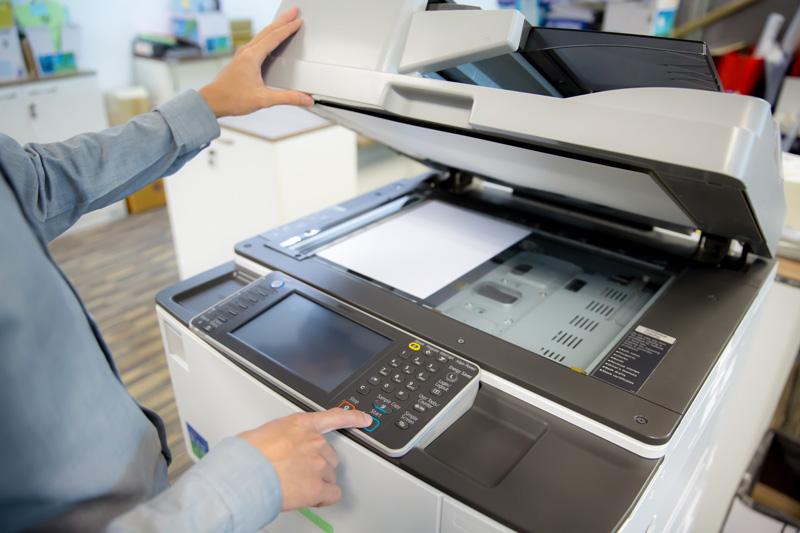 |
ISO/IEC WD TS 22983.2 (currently at the Working Draft stage), being developed by Working Group 6 (WG 6), aims to establish internationally consistent definitions and a structured terminology set for key sustainability and circular economy concepts related to office equipment and related consumables. Terminology is referenced across many stages of the value chain. |
When communication proceeds without common definitions, the same words may be used with different meanings, which can undermine comparability and transparency. TS 22983 provides a “common language” to help avoid such confusion.
In addition, for healthy market adoption and expansion, it is essential that stakeholders share a common basis for understanding and explaining what it means for products to be circular (or aligned with circularity). For users and procurers, it becomes increasingly important that expected environmental provisions also include understanding of quality, safety, and performance.
Building on TS 22983, WG 6 envisions a phased approach to standardization for the “mechanisms of trust” needed as circular markets scale. WG 6 is currently discussing requirements and communication of information for remanufactured and refurbished products as key topics that follow the standardization of terms and definitions. Through this standardization, WG 6 aims to help reduce misunderstandings and misrepresentation, align expectations regarding quality and safety, and support trust-building in circular markets. These efforts are not intended to restrict competition; rather, they are positioned as a common foundation to reduce potential variability in quality, safety, and accountability as circular products become more widespread, thereby supporting healthy market growth.
SC 28 and WG 6 places importance on ensuring that international standards can be implemented in alignment with regional frameworks and market practices. Therefore, in addition to national committees, industry associations, and conformity assessment and procurement stakeholders, WG 6 welcomes practical, working-level exchanges with organizations involved in sustainability and circular economy policy design and rulemaking (e.g., relevant institutions including the European Commission).
In particular, WG6 aims to strengthen the common foundation and reduce gaps between standards and implementation through activities such as sharing and cross-referencing relevant documents, expert participation in meetings (including invited observers), and exchanging use cases and implementation challenges.
WG 6 welcomes feedback, including comments on TS 22983 (WD), real-world terminology usage, procurement and market challenges, and use cases related to remanufacturing and refurbishment. Diverse perspectives are important to strengthen international alignment and assure practical implementation.
For more information contact us using the form at jtc1info.org/contact
Tadanobu Sato
Bidirectional charging infrastructure
“The global transition to electric mobility is no longer a distant ambition — it is happening now. As nations strive to meet the United Nations Sustainable Development Goals and the targets set by the Paris Agreement, electrifying transportation stands as one of the most powerful levers for reducing carbon emissions and building a cleaner future. Smart, interoperable, and reliable charging infrastructure is not optional — it is essential”
Two new important standards have recently been published which will play an important and wide role in relation to electric vehicle charging and will provide the basis for a harmonized EV charging ecosystem. JTC 1’s subcommittee on Interconnection of information technology equipment have published Application protocol for electric vehicle supply equipment (EVSE) chargers and controllers (ISO/IEC 14543-4-303), and Application protocol for electric vehicle supply equipment (EVSE) charger and discharger and controllers (ISO/IEC 14543-4-304).
 |
ISO/IEC 14543-4-303 and ISO/IEC 14543-4-304 establish a common communication framework for interoperable electric vehicle charging and bidirectional energy exchange. While the former enables communication between charging equipment from different manufacturers, the latter extends this capability to support V2G and V2H applications, allowing EVs to return energy to the grid or homes and contribute to smarter, more flexible energy systems. |
Full article from SC 25 can be found here: EV supply equipment
Matthias Fritsche, Dr. Kenneth Wacks
A reminder that Sustainable Development Goals (SDGs) are high priority
There’s been many discussions and increasing awareness across the standardization community about the importance of SDGs over the last two years. And finally the big news is here.
After almost four years of work, ISO/UNDP 53001 is now published. The standard was launched at the ISO Annual Meeting at an open press conference on Monday September 28th, in Paris.
| It has been quite a journey – with experts and delegations from around the world contributing their time, knowledge and, not least, persistence. This has truly been a process of bridging concepts. Two major organizations have come together – ISO and UNDP – and worked to bridge their different approaches, language and expertise around one common ambition: helping organizations turn commitment to the 17 Sustainable Development Goals into action.
Together, strategic cooperation between ISO and UNDP has resulted in something important and practical. With ISO/UNDP 53001 and ISO/UNDP 53002, there is now an opportunity to bring the SDGs to a much wider community of organizations. |
 |
But publication is not the finish line. Now comes the important part: implementation. Organizations need management systems that help them move from good intentions to setting meaningful objectives, taking action, measuring progress and achieving better sustainable development outcomes. So now the ball is with the interested parties. Just imagine if even 10% of the organizations already using ISO management system standards start working with ISO/UNDP 53001. The process of organizing future work is ongoing in ISO and ISO/PC 343 will continue supporting this work and the cooperation between ISO and UNDP as it moves into the next phase.
It is also even more important now, that standards development groups recognize SDG indicators and correctly align their standards with the appropriate SDGs.
Official announcement here: https://www.iso.org/news/2026/09/iso-undp-53001
Jacob Færgemand,
ISO/PC 343
Latest Cybersecurity Journal, Volume 6, issue 2
The Cybersecurity subcommittee (SC 27) release their latest journal in September, which this time covers areas of their cybersecurity portfolio including:
- Information security management systems (ISO/IEC 27001)
- Information security controls based on ISO/IEC 27002 for cloud services
- A foundational standard for securing artificial intelligence systems (ISO/IEC 27090)
This journal and others are freely available and cover many more topics from this area
Volume 6, Issue 2 September 2026 – RECENT SC 27 STANDARDS
Edward Humphries
2026 Event calendar
Past Events
June
SME guidance for implementing ISO/IEC 27001
In 2024, ISO/IEC published a handbook giving practical advice for SMEs in implementing ISO/IEC 27001. This webinar explored some of the guidance and advice given in this handbook. The webinar focused on SME advice regarding:
- Management commitment, support and resources
- Risk management
- ISMS monitoring, review and continual improvement
- Certification
The webinar heard from the authors of this handbook regarding these topics and was followed by an interactive Q&A session.
Recap Video – https://tinyurl.com/ISMS2026Video
Recap Presentations – https://tinyurl.com/ISMS2026Slides
Future Events
October
World Standards Day: 15 -16 October
Sustainable ICT: “How can sustainable ICT practices benefit both our environment and our organization?”
JTC 1/SC 42 plenary: 26 – 30 October
Artificial Intelligence
Montreal, Canada
November
JTC 1 plenary: 9 – 13 November
Malahide, Republic of Ireland
IEC General Meeting: 16 – 20 November
Hamburg, Germany
ISO /TC 307 plenary; 23 – 27 November
Blockchain and distributed ledger
Granada, Spain
Thanks goes out to all our contributors to this quarter’s newsletter, the AG 1 team for getting it ready, and don’t forget that you can submit articles to be included in the next quarterly newsletter by emailing us directly or by using the online submission form at JTC1info.org, we’d love to hear from you.
Deadline for the contributions to the next newsletter is December 12th 2026
Recent Comments