

ISO/IEC AI workshop sessions
on 12 and 14 June

Presentations
12 th June
Kick-off
Wael William Diab –
Presentation
Open Remarks
Gilles Thonet –
Watch the video
Overview of ISO/IEC JTC 1/SC 42
Wael William Diab –
Presentation
Beneficial AI
Lauro Locks – Digital trade in the WTO TBT Committee: overview and trends
–
Presentation
Marc Fiammante – Machine aided detection Newborn Infant Hypoxic Ischemic
Encephalopathy (HIE) on EEGs for hypothermia treatment –
Presentation
Stephen Kwan – Beneficial AI systems –
Presentation
Michael Blumenstein – How AI is transforming humanity for the global good –
Presentation
Novel AI Standardization Approaches
Adam Smith – Integrating
systems and software best practice with AI –
Presentation
Arnault Ioualalen – From
being robust to being trustworthy, an AI challenge –
Presentation
Colin Crone – Overarching data life cycle framework for
AI systems –
Presentation
Kim Lucy, Paul Cotton, Susanne Kuch, Marta Janczraski
– International standards portfolio to enable responsible and certifiable AI systems –
Presentation
14 th June
Kick-off
Wael William Diab –
Presentation
AI Applications – Financial Applications
Qiang Zhang – Sharing
of MAS Responsible AI Journey
Florian Ostmann
– AI in Financial Services: Applications, benefits & risks, and governance considerations –
Presentation
Dan Jermyn – Building
a Customer Obsessed, AI-Drive Organisation –
Presentation
Jim Northey
– AI and Financial Services –
Presentation
Aurelie Jacquet – Responsible
AI-enabled Financial Services: Leveraging the SC 42 Work Program for Financial Applications –
Presentation
Emerging Tech Trends and Requirements
Edy Liongosari – Responsible Democratization of AI –
Presentation
Owen Larter – Emerging trends and considerations on how to govern AI
–
Presentation
Jen Gennai – Responsible AI Governance
Closing Remarks
Program Committee – Insights from the Workshop
Video recordings of the two sessions


Speakers

Adam L Smith, CTO of Dragonfly
Adam L Smith is CTO of Dragonfly, a convenor and project leader in SC 42, Chair of the British Computer Society Fellows and an author on AI, quality and testing.

Arnault Ioualalen, CEO of Numalis
Arnault Ioualalen, following two Masters, one in computer science research in 2007 and the other in mathematical research in 2009, obtained a PhD in computer science in 2012. After a period of teaching and research at the University of Perpignan, he co-founded in 2015, the Montpellier-based company Numalis, specialized in software editing for the robustness and explicability validation of Artificial Intelligence algorithms based on formal methods.
In parallel to his entrepreneurial activities, he is since 2018 an expert at the ISO/IEC SC42 and the editor of the 24029 series of standardization documents. More recently, he is also involved in the development of European standards on Artificial Intelligence, which will serve as a basis for the future European regulation, the AI-Act.
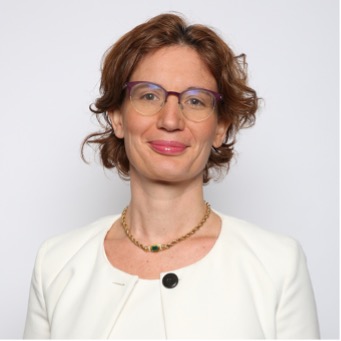
Aurelie Jacquet, Consultant on AI, data ethics & the responsible implementation of emerging technologies
Aurelie is an independent consultant who advises ASX 20 companies on the responsible implementation of AI with a specific focus on Financial Services organisations. She also works as Principal Research Consultant on Responsible AI for CSIRO-DATA61, Australia’s National Science Agency, and is the co-chair of Australia Computer Society’s AI Ethics Committee.
She leads global initiatives for the implementation of Responsible AI. To cite a few, she is:
• The chair of the standards committee representing Australia at ISO/IEC JTC1 SC42;
• An expert advisor for the Responsible AI Institute which under the umbrella of the World Economic Forum is developing the first accredited global certification program for AI; and
• an expert on AI risks and Accountability and AI incidents for OECD.ai Group
In 2021, she was appointed by the European Commission as an expert as part of their international outreach initiative, which helps promote the EU’s vision on sustainable and trustworthy AI. Also in 2021, she won the Australia-New Zealand Women in AI and the Law award, she was recognised by Women in AI Ethics (WAIE) as one of the 100 Brilliant Women in AI Ethics globally, and the Responsible AI Institute Leadership Award.

Colin Crone, Director ISOCO (UK)
Colin Crone, director ISOCO(UK) Ltd a UK based consultancy that specialises in artificial intelligence and cyber security frameworks, helping companies create safer AI. He is an expert member of ISO/IEC JTC 1/SC 42 – Artificial intelligence Working Group 2, editor of ISO/IEC CD 8183 – Data life cycle framework and an Associate Partner with BSI.

Dan Jermyn, AI Leadership | Chief Decision Scientist at Commonwealth Bank
Dan Jermyn is an experienced leader in both technology and analytics, with an established record of building award-winning, global teams in digital, big data and customer decisioning. Dan joined the Commonwealth Bank of Australia in 2017, where he has responsibility for ensuring they harness specialisms in AI, data science, experimentation, and behavioural economics to drive decisions that help improve the financial wellbeing of CBA’s customers and communities.
After gaining master’s degrees from both Oxford University and Cardiff University, Dan first plied his trade as a strategy consultant and then Head of Analytics for an agency in the UK, where he led engagements with a host of major corporate and governmental organizations. He followed this up by co-founding a successful digital technology start-up. Dan joined CBA from the Royal Bank of Scotland, where he held various roles including Head of Digital Analytics and Head of Big Data & Innovation.
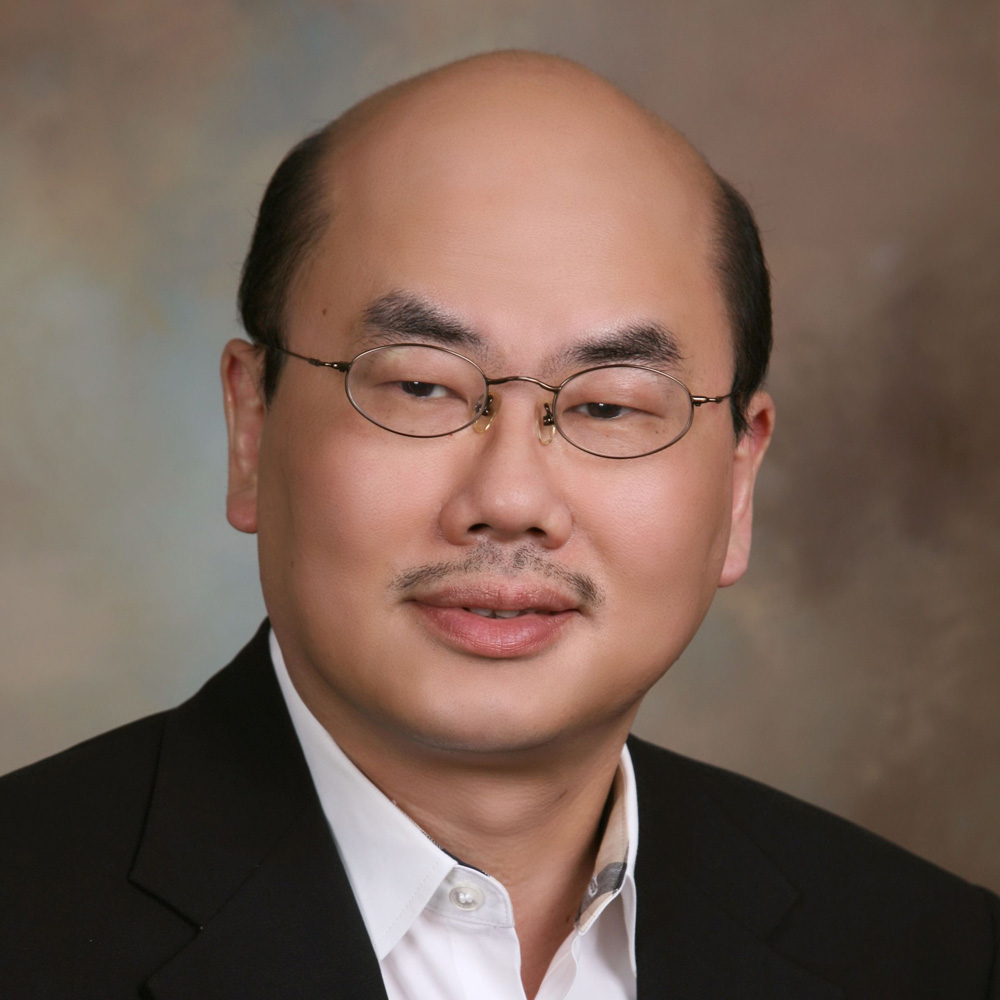
Edy S. Liongosari, Accenture’s Chief Research Scientist and Managing Director
Edy S. Liongosari is Accenture’s Chief Research Scientist and Managing Director. He is responsible for the agenda and outcomes of Accenture Labs – Accenture’s technology R&D organization — with the objective of shaping the future with breakthrough technologies through applied R&D. The Labs’ is engaged in an extensive range of technology areas from artificial intelligence, robotics, cyber security to smart materials.
Edy has been a key member of the Accenture technology leadership team for over three decades, during which time he has garnered extensive experience in various technology domains such as Internet of Things, Cloud and Edge Computing, Artificial Intelligence and Software Engineering. His expertise spans diverse verticals such as Life Science, Defense, and Industrial Engineering, across multiple geographies most notably the US, Europe, and India.
Edy is a Fortune Connect Fellow and holds dozens of patents across the globe. He and his team have received numerous awards for innovation. A copy of his research work has also been placed into the Smithsonian’s permanent research collection.

Florian Ostmann, Head of AI Governance and Regulatory Innovation at The Alan Turing Institute
Florian Ostmann is Head of AI Governance and Regulatory Innovation at The Alan Turing Institute, the UK’s national institute for data science and artificial intelligence. In this role, Florian leads the Turing’s work on the AI Standards Hub – a new UK initiative dedicated to knowledge sharing, community building, strategic research, and international engagement around standardisation for AI technologies.
More broadly, his work and areas of expertise include regulatory and non-regulatory governance mechanisms for AI as well as the use of AI to address regulatory and societal challenges. The financial services domain has been a particular focus of Florian’s work, with recent projects examining questions of responsible AI innovation in financial services (through a report commissioned by the UK’s Financial Conduct Authority) and the use of data and machine learning to address modern slavery risks in the investment context. Florian holds a Master in Public Policy from the Harvard Kennedy School and a PhD from University College London.

Jen Gennai, Founder/Director, Responsible Innovation at Google
Jen Gennai founded, and now leads, Google’s Responsible Innovation team, which operationalizes Google’s AI Principles to ensure that Google’s products have fair and ethical outcomes on individuals and society broadly. Responsible Innovation has established Google-wide AI governance programs and is ensuring Google is prepared for global AI regulations.
Her team works with product and engineering teams, leveraging a multidisciplinary group of experts in ethics, human rights, user research, and racial justice to validate that outputs align with our commitments to fairness, privacy, safety, societal benefit, and accountability to people. Before she co-authored Google’s AI Principles with a multi-disciplinary group of experts in 2017 and established the Responsible Innovation team in 2018, Jen led user research in Trust and Safety and founded the product fairness testing team. She has been at Google for 16 years.

Kimberly Lucy, Director of GRC Standard, Microsoft
Kim Lucy is a Director of GRC Standards at Microsoft, where she has worked for over a decade. She began her career at E&Y performing info security auditing and consulting. Kim has practical experience implementing and auditing security and privacy standards for diverse organizations, and now works as part of Microsoft’s Corporate Standards Group, participating in ISO standards committees to help develop, draft, and revise international standards for artificial intelligence, privacy, and cybersecurity.
She is particularly interested in the alignment of international standards to regulatory and legal frameworks for emerging technologies such as artificial intelligence, and how organizations can leverage these standards for regulatory compliance.

Lauro Locks, Legal Counsellor at the WTO’s Trade and Environment Division
LAURO LOCKS has been working at the WTO Secretariat since 2002. He is currently legal Counsellor at the WTO’s Trade and Environment Division, where he provides legal and policy assistance to Members and Committees mainly with respect to regulatory matters related to the Agreement on Technical Barriers to Trade (TBT Agreement), including in the context of trade disputes.
The TBT Agreement covers national standards and regulations affecting international trade covering many different policy issues, such as: trade & health (e.g., non-communicable diseases, anti microbial resistance, medical goods quality and safety, synthetic biology, etc.); trade & environment (e.g., energy efficiency labelling); and, more recently, digital related standards and regulations (e.g., AI, blockchain, 3D printing, IoT, cybersecurity, etc). Previously, Mr. Locks was Counsellor at the WTO’s Legal Affairs Division and, before, at the WTO’s Intellectual Property Division.
He also worked with legal trade matters in law firms in Washington DC (USA) and in Rio de Janeiro (Brazil). Mr. Locks has a Bachelor of laws degree (LL.B.) (Brazil); a Master of Arts in Law and Diplomacy (Fletcher School, Tufts University, USA) and a Master of Laws degree (LL.M.) in intellectual property law (George Washington University Law School, USA).
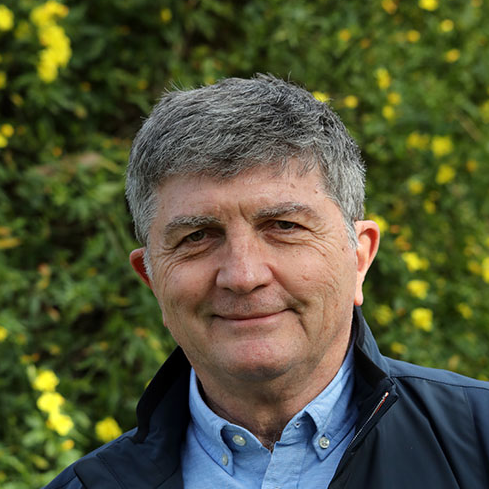
Marc Fiammante, Retired IBM Fellow. Scientific advisor to Oktal-SE
Marc Fiammante has been part of AFNOR CN42/ ISO SC42 since its creation. Marc now is a retired IBM Fellow, and a PhD student at Paris Brain Institute on the early detection of newborn infant hypoxic ischemic encephalopathy. Marc is also a scientific advisor to OKTAL-SE a company creating synthetic data and state of the art multi-sensor simulation software and services in both Electro-Optic (Visible, Infrared) and Radiofrequency (Radar, GNSS) domains.
He has a long experience in information technology and is the author of 19 patents among which four related to artificial intelligence, two books on SOA and BPM and various articles.
Marc is an engineer on Ecole Centrale de Paris (79), worked for Total oil company on Offshore rigs from 1981 to 1983 thenjoined IBM end of 1983.
He held various development then software architecture and consulting roles. Since 2002 he lead a global team delivering SOA and BPM projects then form 2010 a team delivering government projects and finally became the global CTO for Governments at IBM.

Marta Janczarski, National Standards Officer for Microsoft Ireland
Marta Janczarski is the National Standards Officer for Microsoft Ireland. She is the project editor of the ISO/IEC 42001 AI Management System Standard under development in ISO/IEC JTC 1/SC 42 Artificial Intelligence.
She is the chair for the Irish National Mirror Committee for ISO/IEC JTC 1/SC 27 Information security, cybersecurity and privacy protection as well as CEN-CENELEC JTC 13 Cybersecurity and data protection. Marta is a recognized subject matter expert in data and AI governance, standards and innovation. She has served in various advisory and strategist capacities, in both the private and public sectors in Europe as well as Canada.

Michael Blumenstein, Professor and the Acting Dean of the Faculty of Engineering and IT at the University of Technology Sydney (UTS)
Michael Blumenstein is currently a Professor and the Acting Dean of the Faculty of Engineering and IT at the University of Technology Sydney (UTS), Australia. Michael was awarded his PhD in 2001 from Griffith University where his thesis focused on the application of AI to the field of handwriting recognition. Michael is a nationally and internationally recognised expert in the areas of automated Pattern Recognition and Artificial Intelligence and is the leading authority in document analysis and recognition research in Australia. His current research interests include Marine Life and Shark Detection from Video Imagery, Document Analysis, Video-based/multi-lingual Text Detection and Signature Verification. He has published over 300 papers in refereed books, conferences and journals. His research also spans various projects applying Artificial Intelligence to the fields of Engineering, Environmental Science, Neurobiology and Coastal Management. Michael has secured internal/nationally competitive research grants to undertake these projects with funds exceeding AUD$6.5 Million. Components of his research into the predictive assessment of beach conditions have been commercialised for use by local government agencies, coastal management authorities and in commercial applications.
In addition, Michael’s team has developed SharkSpotter, a world-first AI-based technology for detecting Sharks in the ocean from Uncrewed Aerial Vehicles (UAVs). The software was developed in collaboration with local company, The Ripper Corporation (formerly Ripper Group), to protect beachgoers and to save lives. It was deployed at over 50 beaches in Australia (including within New South Wales and Queensland). SharkSpotter has attracted numerous industry awards, including recognition at the National iAwards for the 2018 AI or Machine Learning Innovation of the Year. Following the success of SharkSpotter, Michael’s team developed world-first technology to protect North Queensland’s waterways from predators via the launch of CrocSpotter in 2019. In 2020, Michael’s Team was conferred the Australian Association for Uncrewed Systems (AAUS) Industry Champions Innovation Award for research undertaken on their AI-Spotter suite of technology.
In 2009 Michael was named as one of Australia’s Top 10 Emerging Leaders in Innovation in the Australian’s Top 100 Emerging Leaders Series supported by Microsoft. Michael is a Fellow of the Australian Computer Society and a Senior Member of the IEEE.

Owen Larter, Director of Responsible AI Public Policy at Microsoft
Owen Larter is the Director of Responsible AI Public Policy at Microsoft. Owen’s career at Microsoft has spanned more than five years with various roles in the company’s Government Affairs division where he has focused on data protection and cybersecurity policy issues at the UK and EU levels. Owen also serves on the board of Compass Housing Alliance, is a Term Member on the Council on Foreign Relations, and is the co-founder of The Aspen Institute’s Next Generation Network.

Paul Cotton, Founder and President of PBC & Associates
Paul has over 50+ years of experience in all aspects of software development and IT standards. Paul is credited with Microsoft’s cloud computing interoperability and standards strategy. In 2017, he retired from Microsoft after leading the company’s XML query, web services, HTML5 and cloud computing standardization efforts within the World Wide Web Consortium (W3C), OASIS, WS-I and ISO/IEC JTC 1.
Paul has represented Canada in JTC 1 SC 32 (database languages), SC 38 (cloud computing) and SC 42 (artificial intelligence). Paul is currently Convenor of SC 42 Working Group 1 on AI Foundational Standards. His overseas experience includes IT assignments for CUSO, Global Affairs Canada and the United Nations in Tanzania, Chile, and Burma.
Paul has MMath and BMath degrees in computer science from the University of Waterloo.

Stephen K. Kwan, Director on the board of American National Standards Institute (ANSI)
Dr. Stephen K. Kwan is a director on the board of American National Standards Institute (ANSI). He is the editor of ISO/IEC CD TR 5259-6 Visualization framework for data quality and ISO/IEC AWI TR 21221 Beneficial AI systems in ISO/IEC JTC1 SubCommittee 42 Artificial Intelligence. He also serves on working groups in ISO’s Committee on Consumer Policy (COPOLCO), ANSI’s Committee on Education, ISO Council, International Policy Advisory Group, and Consumer Interest Forum. He retired from being the Associate Dean of Graduate Programs and Lucas Professor of Service Science in the Lucas College and Graduate School of Business at San José State University.
As a Professor Emeritus he is still actively involved in research in Service Science, Management, Engineering, and Design (SSMED), global E-Commerce, service standards and standardization. He is also a fellow of the International Society of Service Innovation Professionals (ISSIP). He had published in the areas of Service Science, Queueing Systems, Database Management, E-Commerce, Service Standards, Standards Education and Standards Policy. He received a B.S. and M.S. in Computer Science from the University of Oregon, and a Ph.D. in Management from UCLA.

Susanne Kuch, Digital policy officer at the German Accreditation Body (DAkkS)
Susanne Kuch is digital policy officer at the German Accreditation Body (DAkkS) and coordinates the joint QI-Digital initiative in Germany on behalf of DAkkS together with the partner institutions out of the quality infrastructure BAM, DIN and DKE as well as PTB to develop a digital quality infrastructure.
Susanne is Project Leader for ISO/IEC 42006 — Artificial intelligence — Requirements for bodies providing audit and certification of artificial intelligence management systems and is involved in the national, European and international standardization committees on artificial intelligence.

Zhang Qiang, Retired IBM Fellow. Scientific advisor to Oktal-SE
Zhang Qiang is a Deputy Director at Monetary Authority of Singapore (MAS), FinTech and Innovation Group, focus on AI ecosystem development in the financial industry and lead the responsible AI initiative – Veritas Project.
Qiang has over 10 years of experience in financial industry working on FinTech and innovation, industry ecosystem development and data analytics. Over 15 years of software development management experience in risk management and enterprise information system. Before joining MAS, Qiang worked as Director of Software Engineering at Moody’s Analytics as an architect lead for strategic team, focused on Big Data framework. Previous work experiences include technical lead for risk management standard production (RiskOrigins) development and customization as well as development work for risk management reporting system.
Moderators
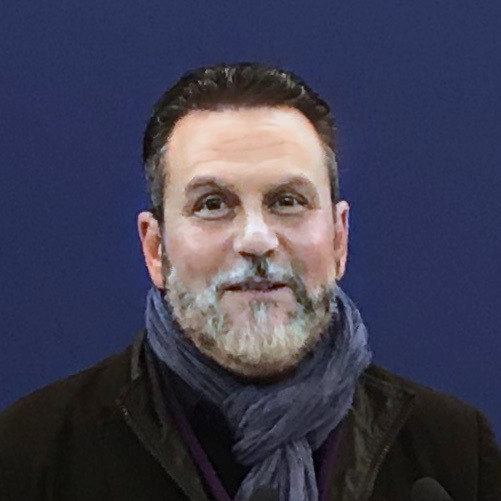
Norbert Bensalem, Technical Relation Executive IBM France
Norbert Bensalem is an experienced professional in the ICT industry with over 22 years of expertise. He has dedicated 13 years to standardization activities and has spent more than a decade focusing on sales, customer relationship management, and customer satisfaction. Prior to his involvement in the ICT industry, Norbert gained valuable experience in the pharmaceutical industry, where he concentrated on consolidating processes and implementing standardization practices.
Norbert’s commitment to standardization is evident through his active membership in various influential organizations. Since June 2011, he has been a member of both AFNOR and ISO/IEC JTC1, contributing his expertise and insights to these esteemed bodies. Within AFNOR, Norbert serves as the Chairman of the French JTC1 mirror committee GCTI, where he leads and supervises the committee’s activities. Additionally, he represents the French delegation in international meetings, ensuring that the country’s voice is heard on critical issues.
In his role within ISO/IEC JTC 1 SC 42, Norbert is an integral part of the IEC ACOS TF On Collaborative Safety rep. Furthermore, Norbert has taken on the responsibility of being the IEC SEG 13 Consortia representative, further extending his involvement in standardization efforts.
Since 2014, he has been a mentor in the ISO/IEC JTC1 JTC1 PAS, providing guidance and support to organizations such as OASIS, W3C, GS1, and TOG. In addition, he serves as the Convenor for JTC1 AG 14 Systems Integration Facilitation (SIF), where he facilitates the integration of systems for improved operational efficiency. Recently, Norbert has taken on the role of Convenor for AG 21 Strategic Directions in ISO/IEC JTC 1, showcasing his ability to guide and shape strategic initiatives.

Peter Deussen, Microsoft National Standards Officer
Peter Deussen assumes the position of the Microsoft National Standards Officer for Germany. In this capacity, he is one of the chairs of the German DIN Committee for Artificial Intelligence.
Peter is Editor of various International Standards, including specifications on Risk Management for Artificial Intelligence, and Artificial Intelligence Impact Assessment. Peter is active in various European and international standardization committees, including ISO/IEC JTC 1, its subcommittees SC 27, SC 38 and SC 42, and CEN-CENELC/JTC 21.
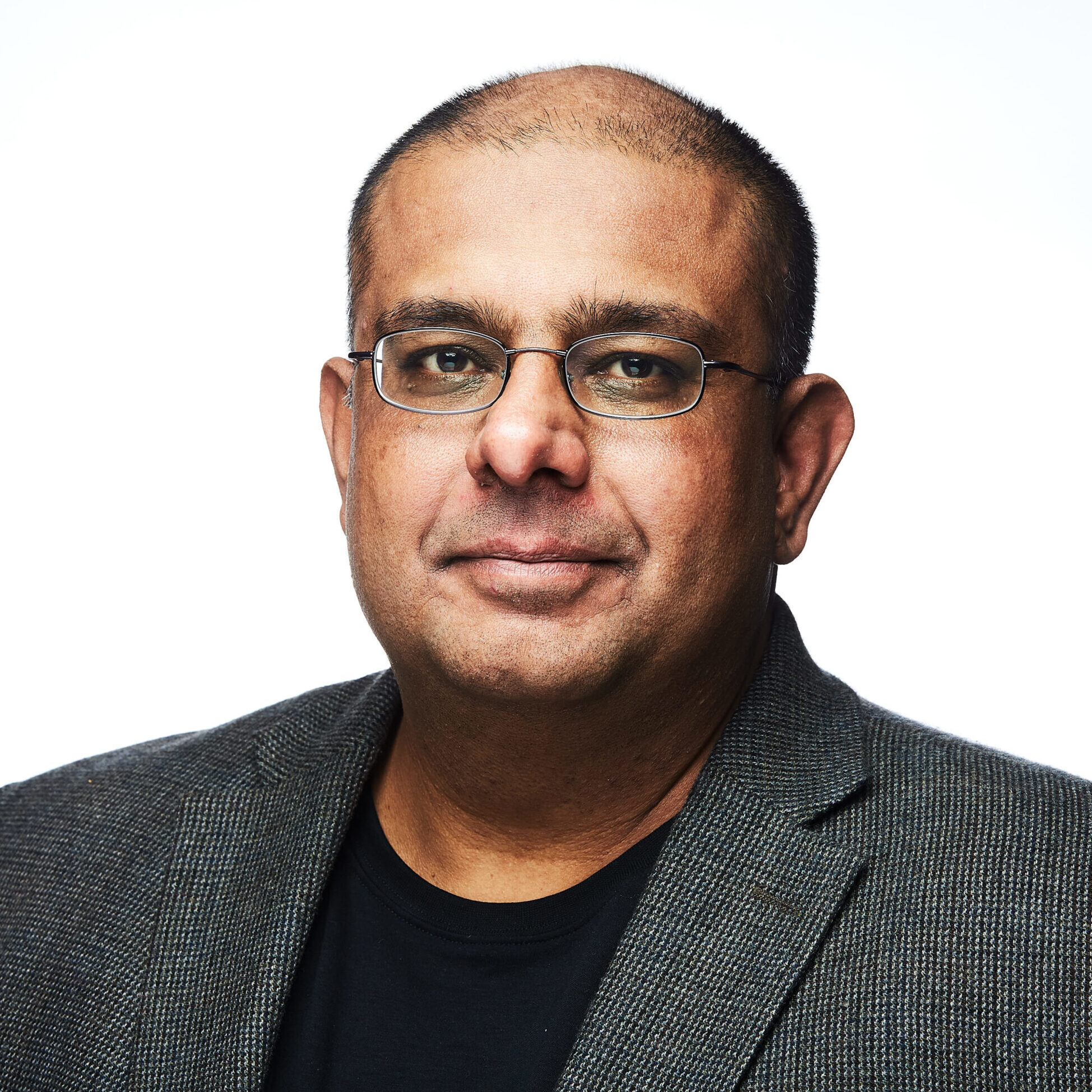
Rohit Israni, Director Cloud and AI Ecosystem Enabling, Intel & Chair INCITS/Artificial Intelligence
Rohit Israni is currently Director Cloud and AI Ecosystem Enabling in the Cloud and Enterprise Solutions Group at Intel. He leads inorganic initiatives and developer relations for Cloud/AI. Earlier, he cofounded the Intel AI Academy and the Intel AI Builder program chartered with bringing Intel’s AI initiatives to leading universities and ISVs world-wide. He is the Chair of INCITS/Artificial Intelligence, the US TAG to SC 42.
Rohit has 20 years of experience in engineering, new product innovation, strategy, finance and business development in a variety of organizations. Prior to his current role, Rohit was responsible for the development of the ecosystem for depth photography for Intel’s RealSense initiatives. Rohit led a collaboration between Intel and Google engineers to create an open standard called XDM (eXtensible Device Metadata) released at www.xdm.org and then taken to JPEG.
Rohit’s prior technical background is in AI and he worked at Imaging Technology (M&A Dalsa), a spinoff from MIT’s AI Lab and one of the survivors of the second winter of AI and at KLA-Tencor, leading semiconductor equipment company, in developing machine learning and computer vision algorithms. He has 2 patents in pattern recognition and machine learning.
Rohit holds a Masters’ degree in Engineering with a specialization in Robotics and AI from Tulane University. He also holds a Master’s degree in Management Science & Engineering with a focus on Entrepreneurship from Stanford University.
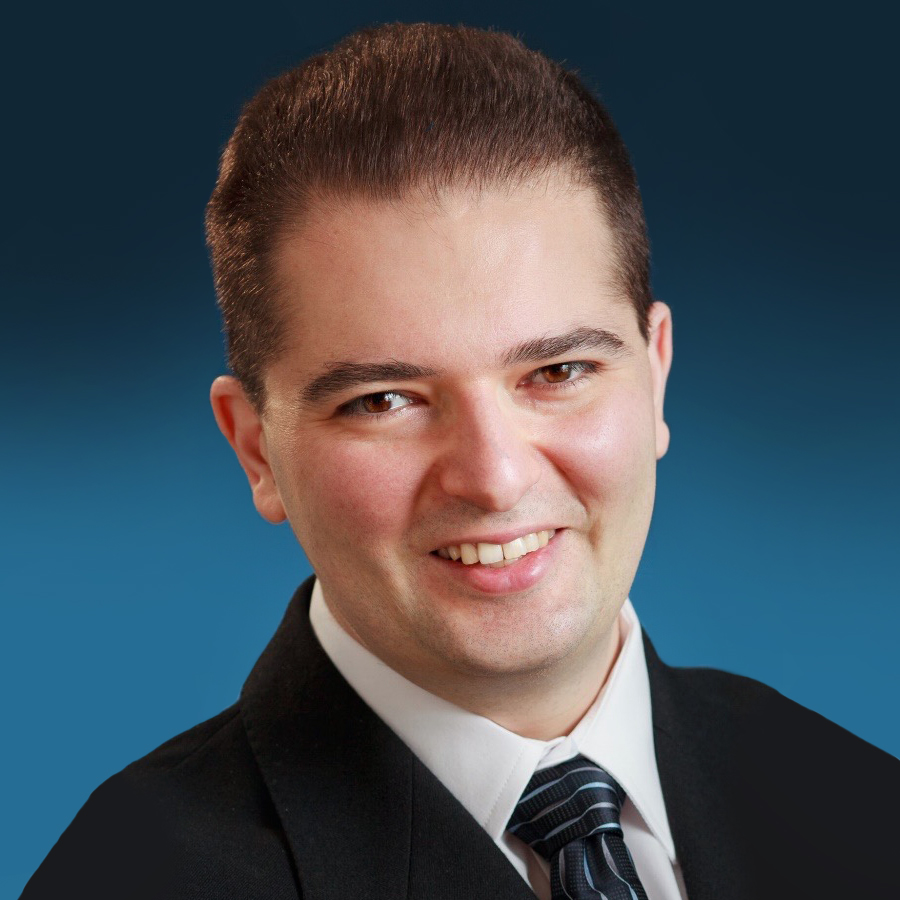
Wael William Diab, Chair of ISO/IEC JTC 1/SC 42 (Artificial Intelligence)
Wael William Diab is a business and technology strategist with more than twenty years of executive experience at Fortune 500 companies in Silicon Valley. He is a prolific inventor with more than 900 patents to his name in the ICT field and an industry recognized expert on digital transformation. Skilled in leadership for breakout technology, Diab has architected strategy, driven industry-wide initiatives, cultivated partnerships, identified M&A